La Soledad
The legacy of a Colombian coffee farmer and community leader
- Story by Kali Abel
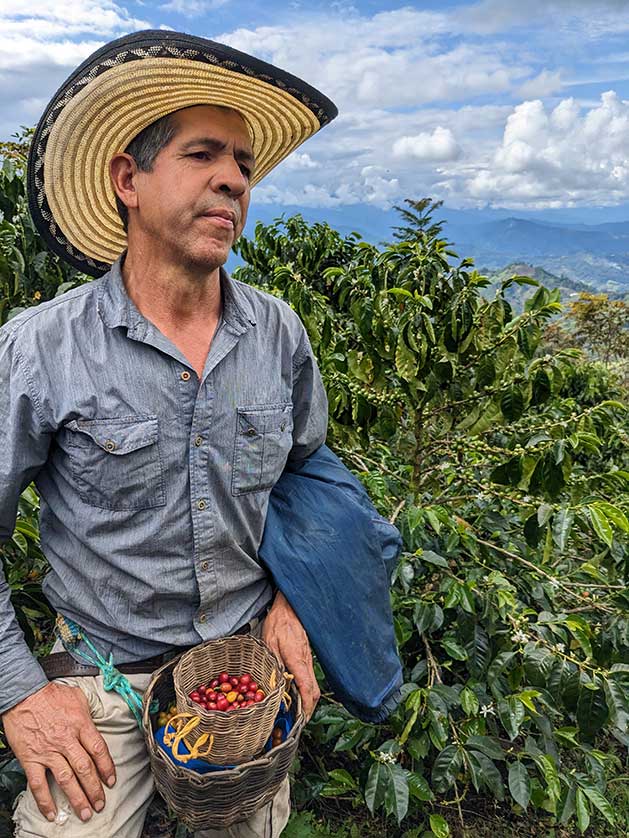
LAST SUMMER, I trailed Jaime on a muddy path through subtropical Andean forest. Together we were in search of a bird, my very favorite, a barranquero also known as “La Soledad.” Almost always hidden from view and almost always alone, I had not yet seen one on this particular visit to Colombia. Upon hearing this, Jaime immediately set out, leaving breakfast abandoned on the table uneaten. We walked in silence, listening for its call, moving purposefully but without much scanning of the trees. It was as if Jaime knew that if he kept moving, kept close in his mind’s eye the bird’s neon blue head streaks, its murderously red eyes, La Soledad would appear for him.
Jaime was a fixture in the community of Jardin, Colombia, for nearly all of his 63 years. A coffee farmer and a community leader, he had an almost otherworldly presence, which is saying something in the country that gave life to magical realism.
In Colombia, a community leader like Jaime is killed on average every two days. It is something of an unspoken wonder that he was able to do his work for so many decades. Somehow, like the mountains upon which his coffee farm rests, he has remained steadfast, even as armed groups, most funded by illicit economies, jostle for power in the shadows around him. Although the sudden violence of armed groups grabs more headlines, it is the slow violence of climate change that farmers like Jaime are actively fighting against.
It was these competing forms of violence that drew me to Jardin to study climate change adaptation in the first place. My work builds from the argument that rather than being an aberration from the norm, informal powers—the local leaders advocating for protection of their land, the armed groups whose power stems from control over that same land—are a central part of social-ecological systems. Over 300 of my students at UP have seen videos, read stories, and engaged with the community in Jardin as they think about how they too might seek solutions for the world’s most complex social-ecological problems. Last semester my students even got a tour of the farm and met family members over Zoom. Against all odds, Jaime, a coffee farmer from a small town in the heart of the Colombian Andes, has become a source of inspiration for students in the United States.
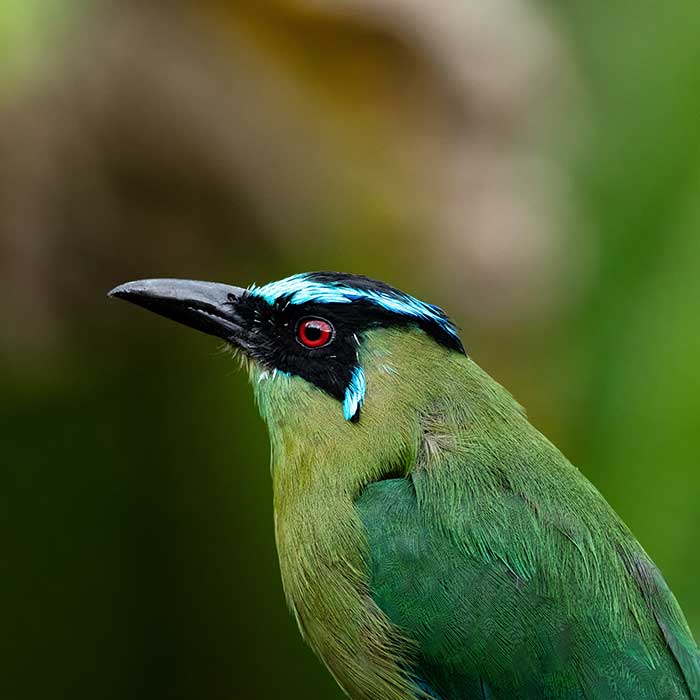
Photo courtesy of Finca Carrizales
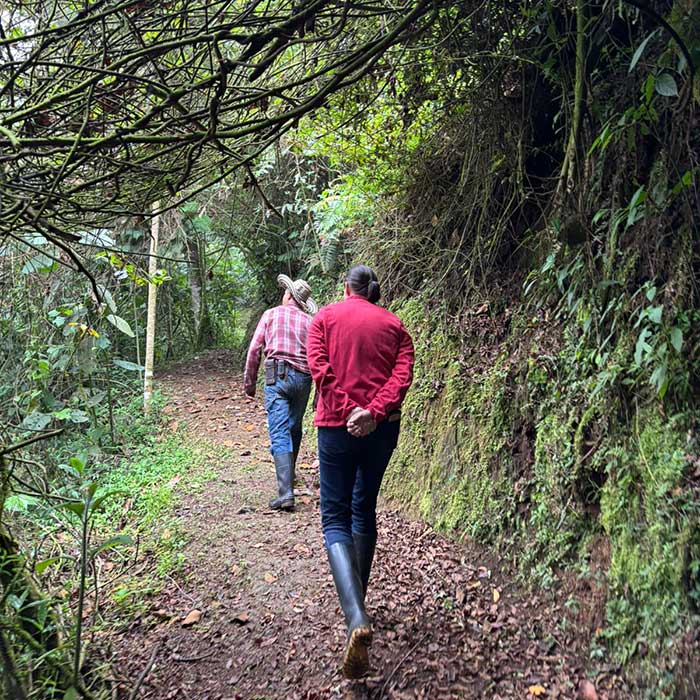
Photo courtesy of Kali Abel
Every year I meet with countless people in my work in Colombia (and drink copious amounts of incredible coffee). However, there is no one like Jaime. Jaime has been my gate-keeper, my “keys to the city,” my late-night gut-check after transcribing a complex interview, my cultural cipher, my political thermometer, my salsa dance teacher, and father figure. His trust in me is what allowed the community to also trust me. Together we have uncovered how this deeply tra-ditional and deeply resilient community responds to climate change in ways that are often unseen.
At the very last corner, rinconcito, of the trail on the day we set out looking for La Soledad, just before the forest became too thick to pass through, the bird flew over Jaime’s right shoulder from behind, nearly brushing his cheek, and came to land on a branch in front of us just out of reach. Jaime laughed. Nothing is more “La Soledad” than making us walk all the way to the very end of the trail, all the way until the last slivers of hope of catching sight of her remain, and only then allowing herself to be seen. The image of her and of Jaime, each seeming to be laughing with one another, is forever imprinted on my heart.
Jaime journeyed to heaven late last year. His family and community will carry on the legacy of his work, and my students and I will continue to walk the trail behind him, with full confidence that care of this land and its people will go on, and their stories will be shared with the world. And just like La Soledad, which has now taken up residence at the entrance to his farm, I know Jaime will be watching.
KALI ABEL, PHD, is a geographer, climate scientist, and political ecologist who has taught in UP’s Environmental Studies Program since 2017.
More Stories
Sparking Careers in Medicine
How two UP alums are inspiring the next generation of health care workers, one high school biology class at a time
- Story by Emily Nelson