Summer Jobs
We asked you to send in stories about summer employment that changed you in some way. As always, Portland Magazine readers delivered!
- Illustrations by Yoko Baum
ON THE LINE
Story by Jacqueline Howard Whitty
Line worker; Birds Eye Cannery; Woodburn, OR; 1966
I worked on the food processing line. Strawberries moved past steadily. The room was loud with machinery and damp enough that the concrete floor never really dried. The line didn’t slow down for anyone. Pick up. Inspect. Sort. Repeat. The monotony was relentless. By the end of a shift, my shoulders ached, and the smell of ripened fruit clung to my fingertips and clothes, long after I had left.
I earned $1.65 an hour, and every dollar earned was one repetitive motion after another. Because the work was seasonal, we worked twelve-hour days, seven days a week.
During breaks, bits of people’s lives surfaced. One woman who worked full time at the cannery told me she wished her children could attend Catholic school, but she couldn’t afford it. When she learned I attended a Catholic university, she spoke quietly but deeply.
I encouraged her to go to the school she wanted for her children and tell her story. I told her the sisters were usually kind and willing to help. “They’ll find a way,” I said, trusting my instinct.
The following summer she rushed up to me on the line. “My kids are at St. Teresa’s!” she said. She told me how the sisters had listened and helped. I remember thinking how small my words had felt at the time—yet how much they mattered.
Another lesson came during a lunch break. In the restroom, I noticed a very thin young woman rummaging through the trash. Her movements were quick and focused. It was clear she was looking for food. I offered her my lunch. She accepted and ate fast, like she hadn’t eaten in a while. Watching her, I realized how easy it is to miss quiet struggles when you’re tired and focused on your own day.
Not every lesson came with a good ending. I became friends with another college-aged worker from a one-car family like mine. One night she needed a ride home, and I was glad to help. Another night I needed one. When her mother—just off a long shift as a hospital nurse—realized she would be driving an extra forty minutes to take me home, she lost her temper with her daughter. I sank into the car seat, embarrassed and silent. Inside my house, I cried—for myself, for my friend, for her mother, who was recently divorced and probably bone tired. Part of me was hurt. In time, I forgave her.
The hardest part of working at the cannery was doing the same thing day after day. But it was also where I learned to pay attention. I learned that people carry struggles quietly, and that sometimes you can help, and sometimes you simply pray. Either way, noticing matters. Tomorrow would be another long day on the line.
JACQUELINE HOWARD WHITTY ’69 has been married to Raymond Whitty ’67 for 57 years. For 30 years, they lived in Seattle, and they now live in Central Oregon.
A GIRL AND HER VACUUM
Story by Phyllis Sherrer Butterworth
Housekeeper; The Benson Hotel; Portland; 1974
One of my UP friends worked part-time as a doorman at The Benson Hotel, a luxury downtown hotel. They were hiring extra housekeepers, he said, for the summer. I applied, was hired, and my summer adventure began.
I learned to clean to spotless perfection thanks to the head housekeeper, a stern woman named Jan. She was a white-glove-wearing, no-nonsense boss. Rooms were not released to guests until Jan put on her gloves and scoured every inch of each room. Hers was serious business in a hotel that catered to presidents (Gerald Ford that year), music industry heavy hitters, business tycoons, and the rich and famous.
I learned a lot that summer and not just about cleaning.
I met a housekeeper named Maria who was raising three children on her own. Keenly aware of her circumstances, Maria relentlessly encouraged me to finish my college degree. I knew she struggled to make ends meet, but not why. She didn’t offer a reason, and I never asked. Still, she generously inspired me to work toward a better life. To this day, she is one of my heroes.
Sometimes, there were perks to cleaning rooms. Upon check-in, notable guests were greeted with an arrangement of red roses and a fresh fruit basket. The more important the guest, the bigger the floral arrangement and the more bountiful the fruit basket. Most guests left their flowers, and few touched their fruit baskets. Goodies left behind were ours to keep; that was high living for a college student on a tight budget!
I also learned about arrogance that summer. My mint green housekeeping dress targeted me as being “less than” to certain guests. In their eyes, because I vacuumed their rooms and sanitized their bathrooms, I was beneath them. That stung.
Finally, I discovered adulthood didn’t equate to happiness. I remember a guest, an older woman, whose suite was her residence. Meals were always room service. Sometimes, she’d pop her head out and ask for a towel, but very rarely wanted her room cleaned. One day she was gone. I learned she was a severe alcoholic estranged from her family. After she left, I found empty liquor bottles rolling around under the bed. Ironically, this was a sobering lesson for a 20-year-old.
That summer’s work also taught me that education takes place outside as well as inside the classroom. Together, my work at The Benson and my studies on The Bluff created in me a desire to achieve, to serve, and to be a better human. Always.
PHYLLIS SHERRER BUTTERWORTH ’75 retired after a long career that included newspaper reporting and editing, marketing communications, public relations, and a time as the director of development for a hospital foundation.
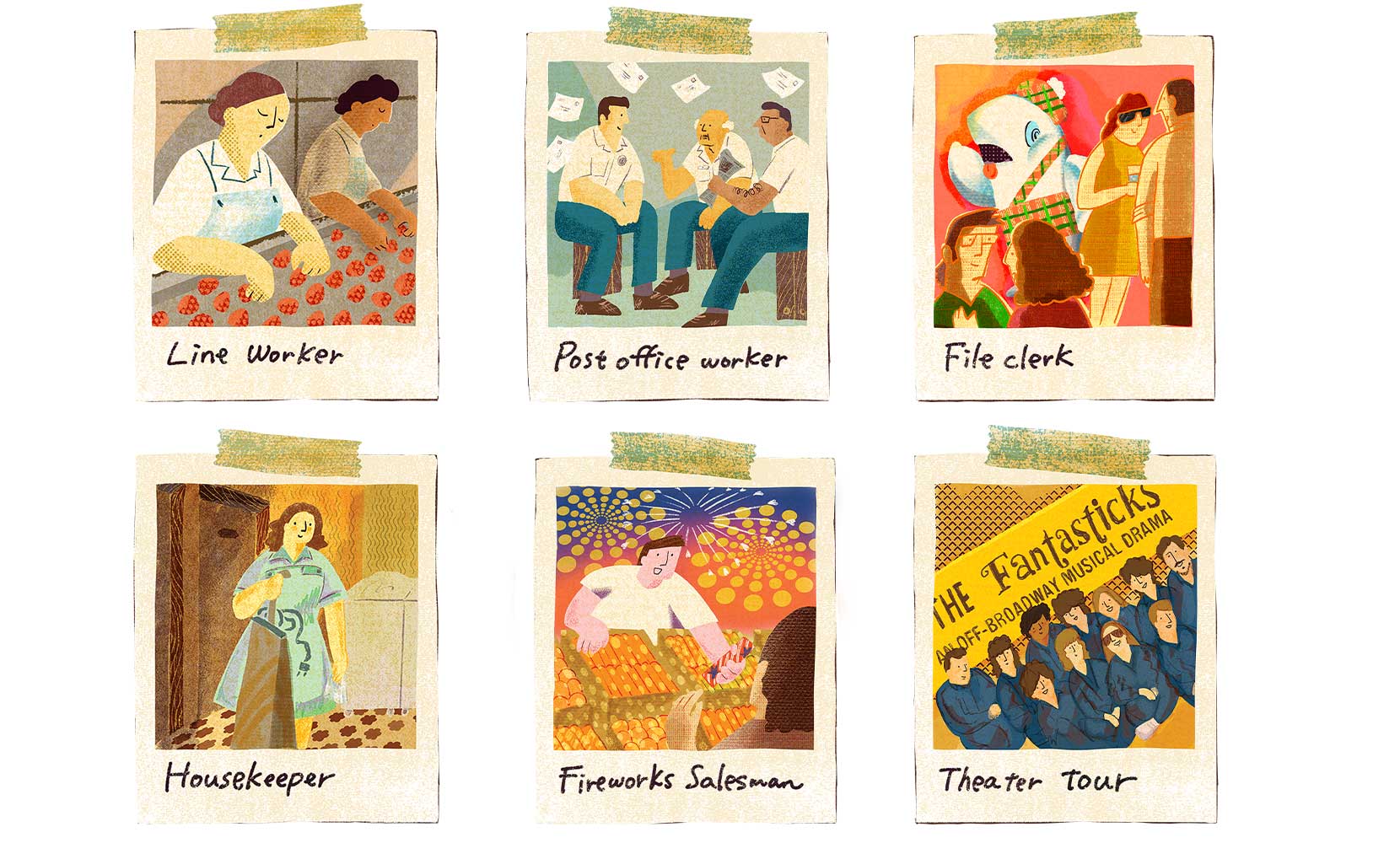
LISTEN CLOSELY
Story by James Larocco
Postal Worker; Chicago; 1968
After my sophomore year at UP, I was elated when I secured a 40-hour-a-week summer job working for the local post office in Chicago earning $4.50 an hour, a princely sum back then when gas was only 19 cents a gallon. That August, the national convention of the Democratic Party took place in Chicago, with rioting and burning. As the only young person in the post office, I could feel firsthand the generation gap of that time as I was looked upon with suspicion. I took the time to sit down with the veteran workers, listening to their points of view with an open mind. This led to a special bond with them and a lesson I learned that has helped me throughout life: Listen to others, putting yourself in their shoes. And the shoes of postmen and women were very well worn!
JAMES LAROCCO ’70 recently stepped down as president of the St. Vincent de Paul Society in Alexandria, VA, and serves as a lay spiritual advisor. A veteran walker of 11 caminos, he serves on two national committees for the American Pilgrims on the Camino and serves on the board of directors for At Home in Alexandria, which serves those who choose to age in place.
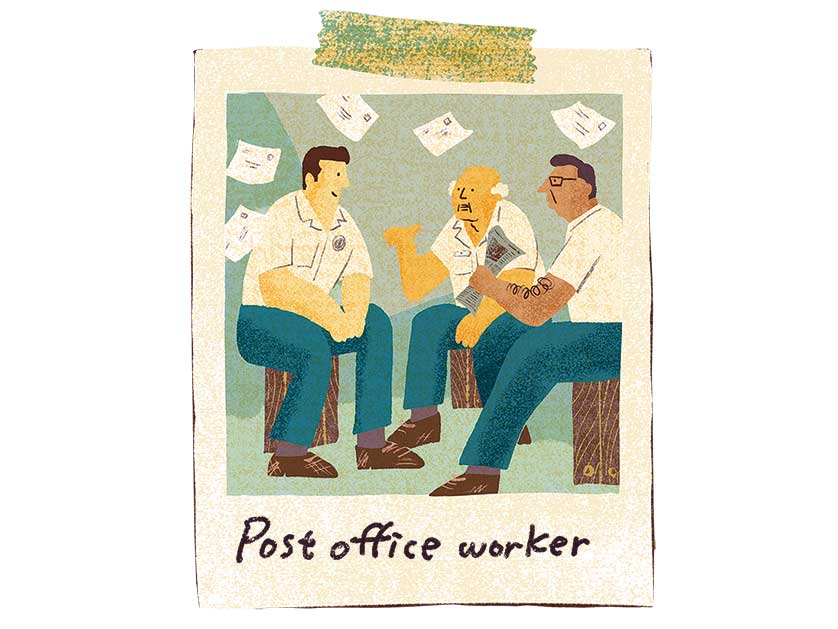
THE FANTASTIC TOUR
Story by Kelliann Amico
Theater Tour; USO; Korean Demilitarized Zone; 1983
That indelible image will always stay with me. I stood inside a wartime structure on the southern side of the Korean Demilitarized Zone. I peered north through binoculars across a concrete courtyard and into a military compound less than 100 feet away. I quickly pulled the binoculars away when I registered what I was seeing: the unmistakable glint of binoculars staring directly back at me from the North.
I was there with the University of Portland cast of The Fantasticks, directed by the legendary Tom Lasswell. Tom had submitted our production to perform for the United Service Organization, the same USO made famous by Bob Hope and Marilyn Monroe. Somehow, that summer, a group of college theater students found themselves representing American entertainment abroad.
For seven weeks, 10 students led by the fearless Jill Peterson toured Korea, Japan, Okinawa, and Hawaii. We performed nearly every day, alternating between The Fantasticks and a variety show filled with singing, dancing, and tap routines. Our audiences were US service members stationed far from home. Even at age 19, I understood performance could offer comfort.
When we weren’t onstage, the world unfolded around us in unforgettable ways. Seoul stood at a crossroads between old and new, preparing for the 1988 Olympics while elders rested outside shops in deep squats that shamed my young knees. We drove through rice paddies. We performed at a cavernous base near Mt. Fuji, danced under disco lights in Okinawa, and splashed in the ocean with young soldiers grateful for a brief escape from duty. We even flew in a Nighthawk helicopter.
All the while, history loomed in traces of horror at Hiroshima, the enormity of reconstruction at Pearl Harbor, and abiding tensions at the DMZ. Abstracts of the past became personal and sharpened the experience for all of us.
The per diem felt extravagant compared to any job I had held before. I saved much of it and bartered the rest in Itaewon markets for gifts: Members Only jackets, silk kimonos, and snakeskin wallets. I also had my first interview suit custom-made there, an affordable investment in the young professional I was becoming.
As the tour continued, our troupe became a family forged through travel, exhaustion, laughter, and shared experience. At every stop we arrived with excitement. At every departure we sang “Love Lifts Us Up Where We Belong,” completely sincere in our youthful intensity. Every goodbye helped me accept one of the most enduring lessons of my life, one Tom Lasswell had imparted through his acting training: live in the moment. I left as a college student with a summer job and returned home understanding the world, and myself, in an entirely new way.
KELLIANN AMICO ’86 is founder of Amico, a Portland-based PR, strategic communication, and community engagement firm, and currently serves as president of the Public Relations Society of America, Oregon chapter.
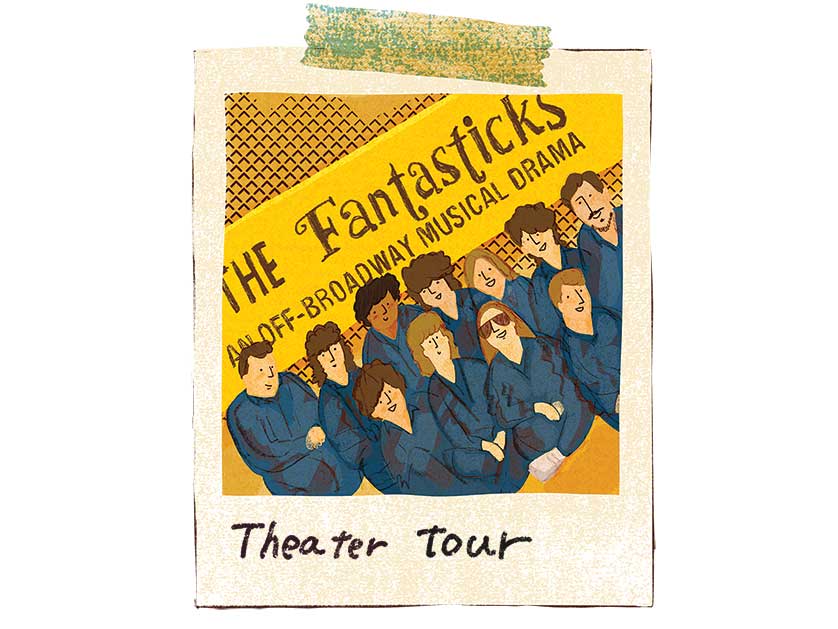
SPARKS FLEW
Story by Matt Sabo
Salesman; Bend, OR; 1990
I had ten days for a big payoff. Ten days to make the money to buy something that would change my life.
Ten days was my window to sell thousands of dollars of Fourth of July fireworks at a rickety stand we built on Third Street in the Safeway parking lot. It was late June 1990, when Bend was still a middling mill town of 20,000 people.
For most of the summer my friend Jared Anderson and I did landscaping work. We made good money raking endless rocks from the volcanic soil before laying down sod, planting shrubs that could withstand the desert extremes, and applying thin layers of piney bark chips. But selling fireworks was our route to quick cash. Jared was quite the entrepreneur and had three stands, but my stand at Safeway was the prime central location.
It was the summer before my senior year of college. At UP, I was on scholarship as a track and cross country runner. My summer training started early—five miles by 7 am—and eight to ten miles after work. During fireworks season, I got up earlier and ran later.
To increase sales, I learned something unique about each item and really sold it, learning and honing the art of persuasive speaking. Some folks call it sales. I remember selling the tri-color sparklers, speaking to the customer in a near whisper: “I shouldn’t tell you this, but duct tape these packs of tri-color sparklers together. Leave one out of the top for a fuse. All I’m saying is to be nowhere close to it when it blows.”
We moved packs of tri-color sparklers by the boxes that summer when word got around what you could do with them. In fact, the state banned them the next year.
Mostly, I learned the reward that comes with hard work and pushing yourself. Have a goal and work relentlessly toward it, like I did with my goal to make a life-changing purchase.
The 12- and 14-hour days paid off. We sold a ton of fireworks at my stand. On commission, I made $1,500 for those 10 days.
Jared paid me in cash on July 5. I went straight to a jewelry store and plopped down $750 for an engagement ring.
Four days later I got down on my knee at a table with a dozen roses on it in a little steakhouse in Oregon City and asked Julie Young to spend the rest of her life with me.
She said yes.
MATT SABO ’91 and Julie recently celebrated their 35th anniversary. Matt is a communications and marketing director for a nonprofit community services agency.
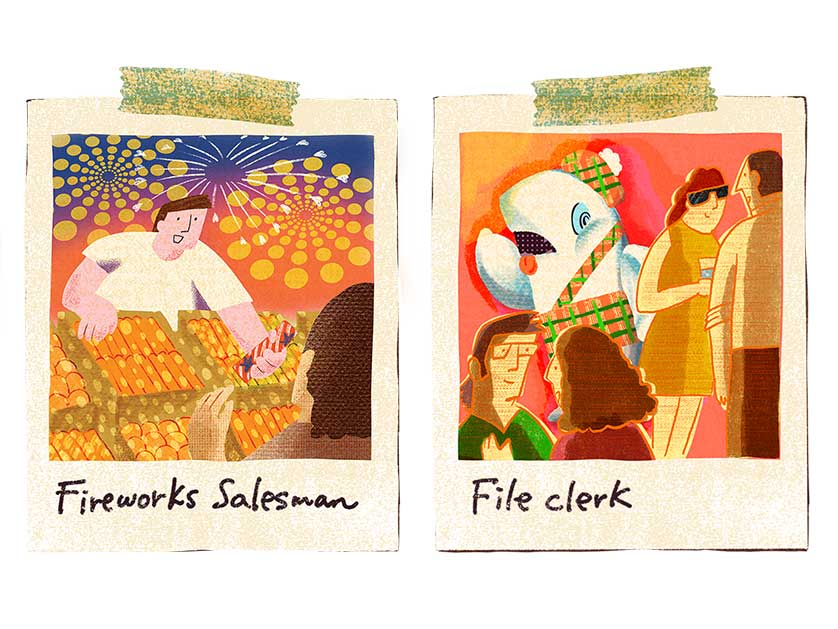
MASCOT FOR A DAY
Story by Kelly Brown
File Clerk; Credit Union; Montana; 2003
One day, as I was making my mail rounds, the branch manager pulled me into her office, looked at me, and said, “Yep, you’ll be perfect!”
What I’d be perfect for, it turned out, was to attend the grand opening of a new branch of the credit union in the next town over as the company’s iconic mascot, a tartan-clad cartoon fish named McFish. The McFish costume had been custom-made years before to fit a short, slight person, so few people could fit inside it. At 5’ 2”, I fit the bill, and I was assigned to attend the festivities the following week.
I couldn’t believe my luck. Not only was I getting out of my basement filing duties for a whole day, but as a theater kid, I was thrilled to get to play a character. I pictured myself gladhanding the attendees, deftly improvising in a flawless Scottish accent.
In reality, I could do little more than waddle and wave. It was summer—and hot—and the fish suit was heavy and stuffy. The little ventilation there was came through a narrow strip of mesh in McFish’s mouth, which was also my only field of vision. On water breaks, when I peeled off the costume, steam rose from my sweaty body; putting it back on was like putting on a wet bathing suit—if bathing suits were made out of 50 lbs of foam rubber.
At one point, a pickup truck full of teenage boys drove by the storefront. They slowed to a crawl, rolled down the window, and hollered at me, “Here, fishy fishy!” and then proceeded to lob an entire dill pickle at my head—or, rather, at McFish’s head, which was a good foot above my own, inside the suit. Howling with laughter, they sped off, leaving me brine-splattered and demoralized.
Afterwards, I returned to my regular job with a renewed appreciation for the musty mundanity of the file room. Sometimes the grass really is greener—greener, even than a dill pickle against the white felt background of a foam rubber fish head.
KELLY BROWN ’08, ’19 works for the City of Portland in the Community & Economic Development Service Area. She lives in the Alphabet District with her partner and their cat.
More Stories
What He’s Made Of
The largely untold origin story of Erik Spoelstra’s NBA coaching career and how his off-court passion for the special needs community has firm ties to his Portland Pilot roots
- Story by Joe Freeman