Chapel of Christ the Teacher Turns 40
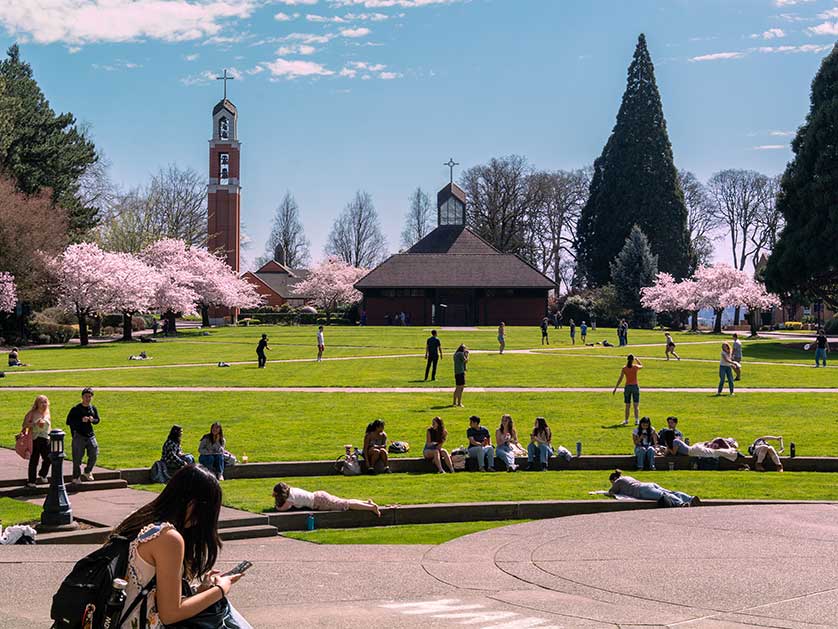
Today it’s hard to imagine University of Portland’s campus without its iconic chapel at the south end of the academic quad. The anniversary of its dedication—October of 1986—offers an occasion to pause and admire the staying power of its beauty, intention, and invitation.
- Story by Gigi Giangiobbe and Jessica Murphy Moo
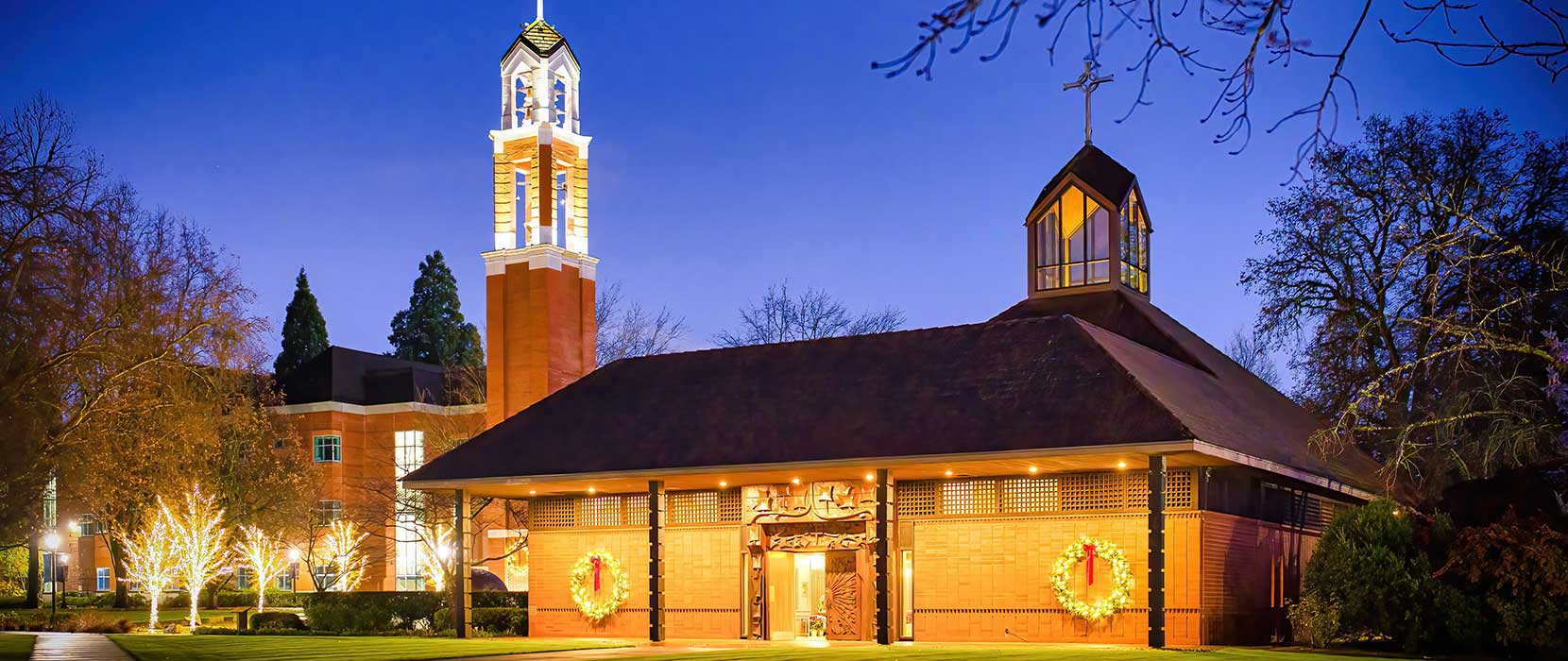
Photo by Martin Tran
Before the Chapel of Christ the Teacher opened its doors, campus worship had a nomadic life—first, in West Hall, then Christie Hall, then St. Mary’s. Visionary leaders had started a chapel fund in the 1950s, and by the 1980s enough money had been raised to bring the dream to fruition during the presidency of Fr. Tom Oddo, CSC. University of Portland would have its long-awaited spiritual home.
The planning committee hired Pietro Belluschi, an architect of national renown, who designed more than 40 churches in the United States, along with the Juilliard School of Music and the Portland Art Museum and more than 50 other buildings. After nearly a decade devoted to design and construction, the Chapel of Christ the Teacher was dedicated on October 5, 1986.
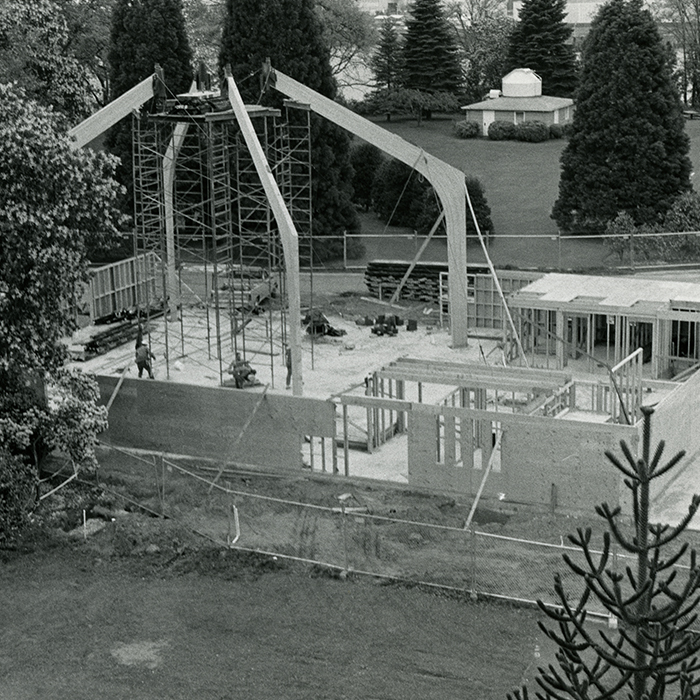
UP Archives
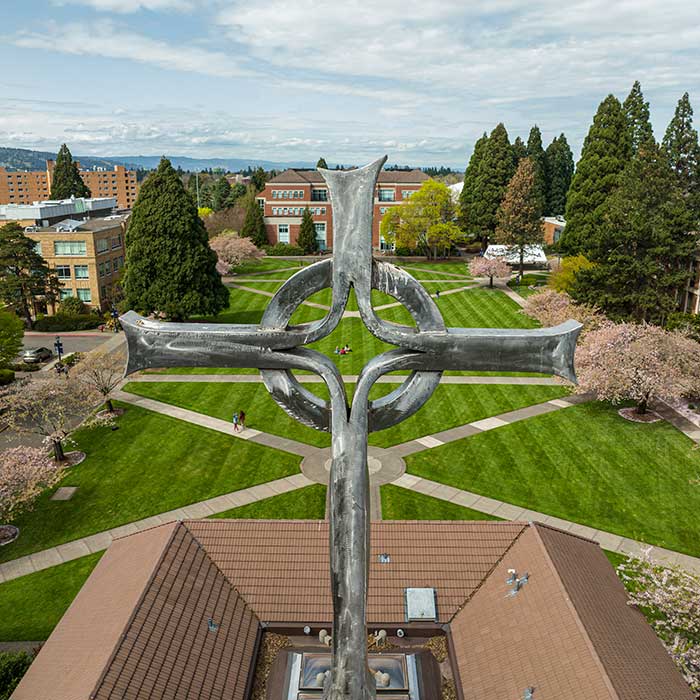
Photo by Jamie Goodwick
Fr. Richard Rutherford, CSC, the University representative who worked closely with Belluschi, says the chapel’s inspired design created a “space of welcome… it invites both the individual and the community.” And that invitation starts with the chapel’s breathtaking exterior doors. They not only encourage you to pause and take in their sunburst pattern and their biblical references to vines and branches, but they were also intentionally designed to open without a central support, so that the entryway is as wide and welcoming as possible. Created by Oregon artist LeRoy Setziol, the doors and the four exterior pillars (with imagery representing Matthew, Mark, Luke, and John) were hand-carved from local oak and black walnut trees.
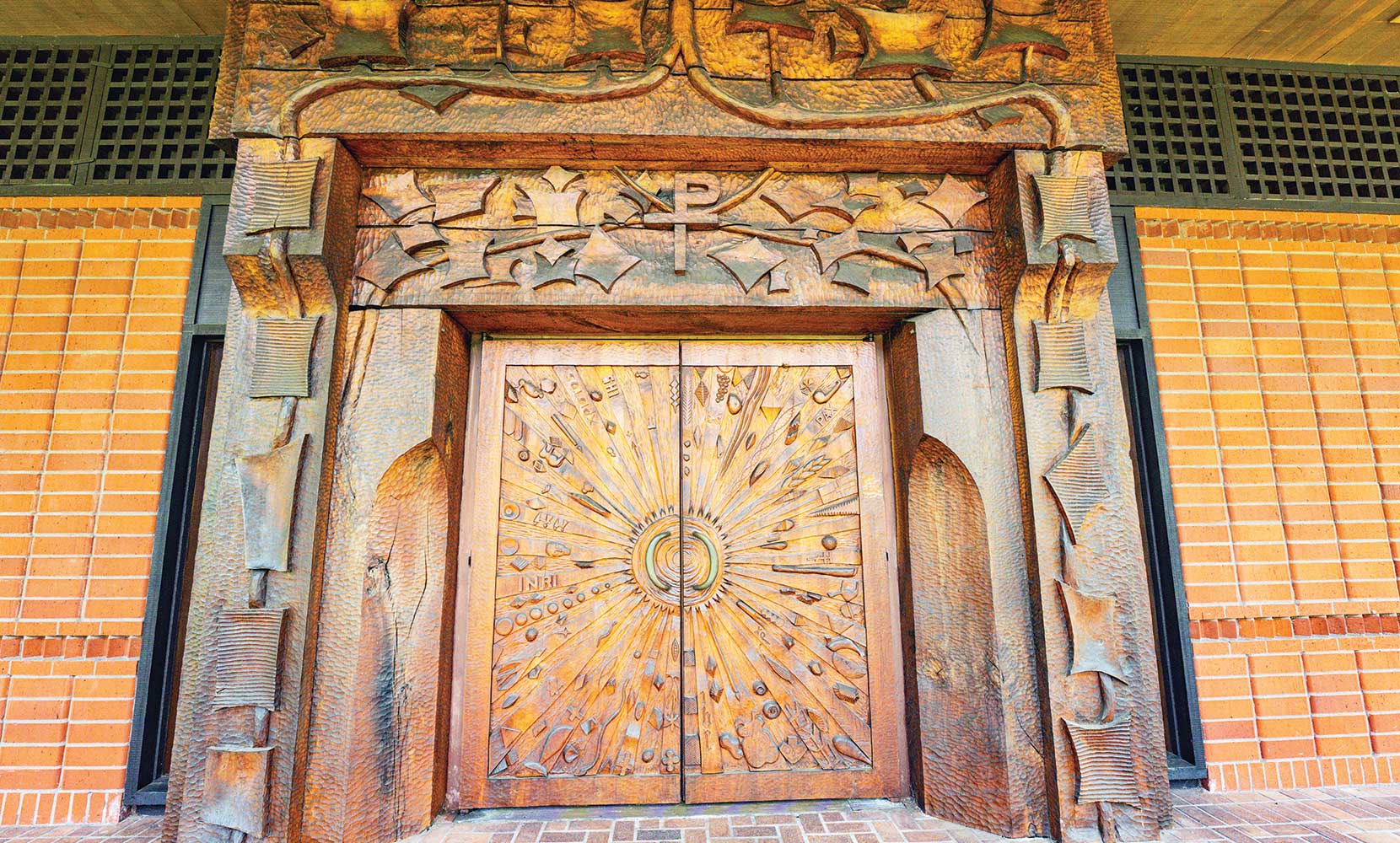
Photo by Chris Brecht
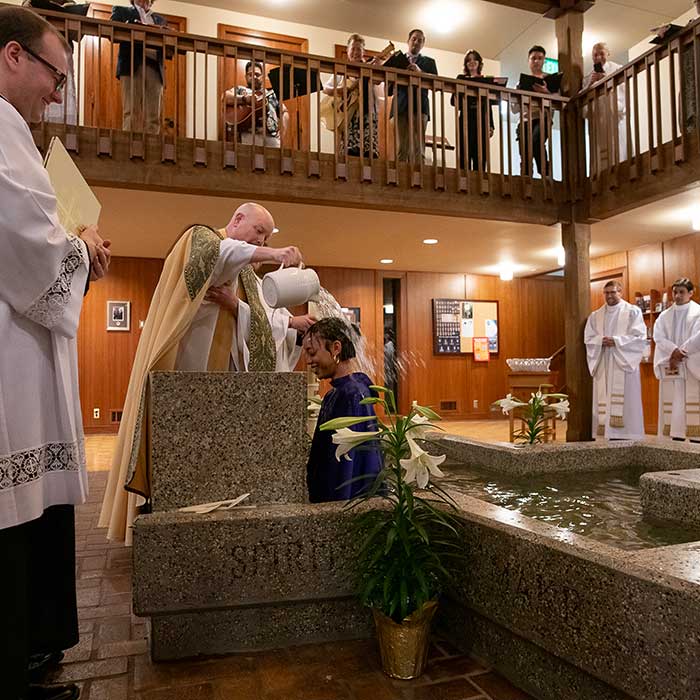
Photo by Bob Kerns
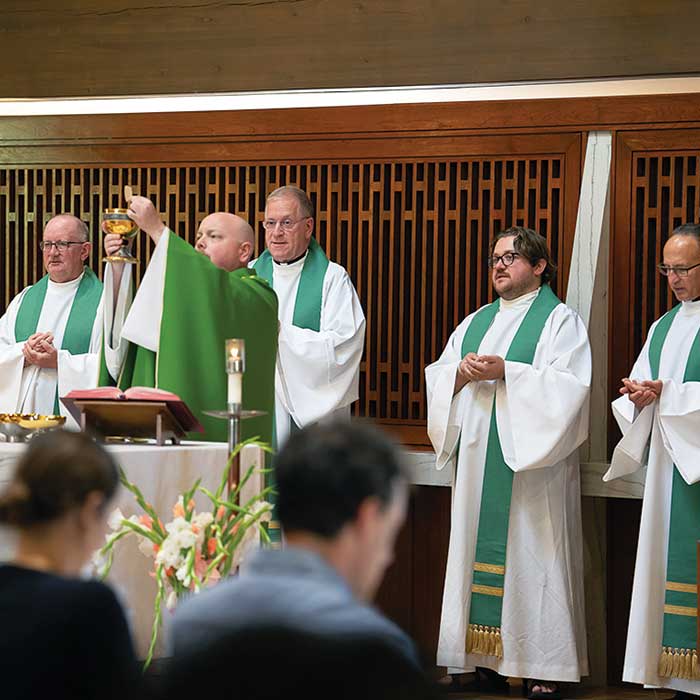
Photo by Bob Kerns
How can we even measure the sacred moments these chapel walls have witnessed and held over the past four decades? We might be able to catalogue the liturgies, track the songs and programs, the celebrations and inaugurations, the sacraments where we’ve brought our joy and hope and grief. But how to quantify the chapel’s invitation to prayer or silent expression of the longings of the heart? How to count the strengthened friendships that grow from shared communion? How is it that a chapel’s interior can invite us deeper into our own?
In 1991, Belluschi remarked, “Building churches and other artistic spaces provides an environment—that might invite people busy about the knowledge explosion to stop a moment and contemplate the mystery.” This invitation is as true today as it was so many decades ago.
GIGI GIANGIOBBE ’26 is Portland Magazine’s editorial intern. JESSICA MURPHY MOO is the magazine’s editor.
More Stories
A Holy Chorus
A new icon of the women of the New Testament has been installed in Mehling Hall’s chapel
- Story by Cameron Bellm