Cadet Life
Cadet Life
Day to Day Life
The typical week for an Army Cadet includes physical training, academic instruction, and hands-on field experience.
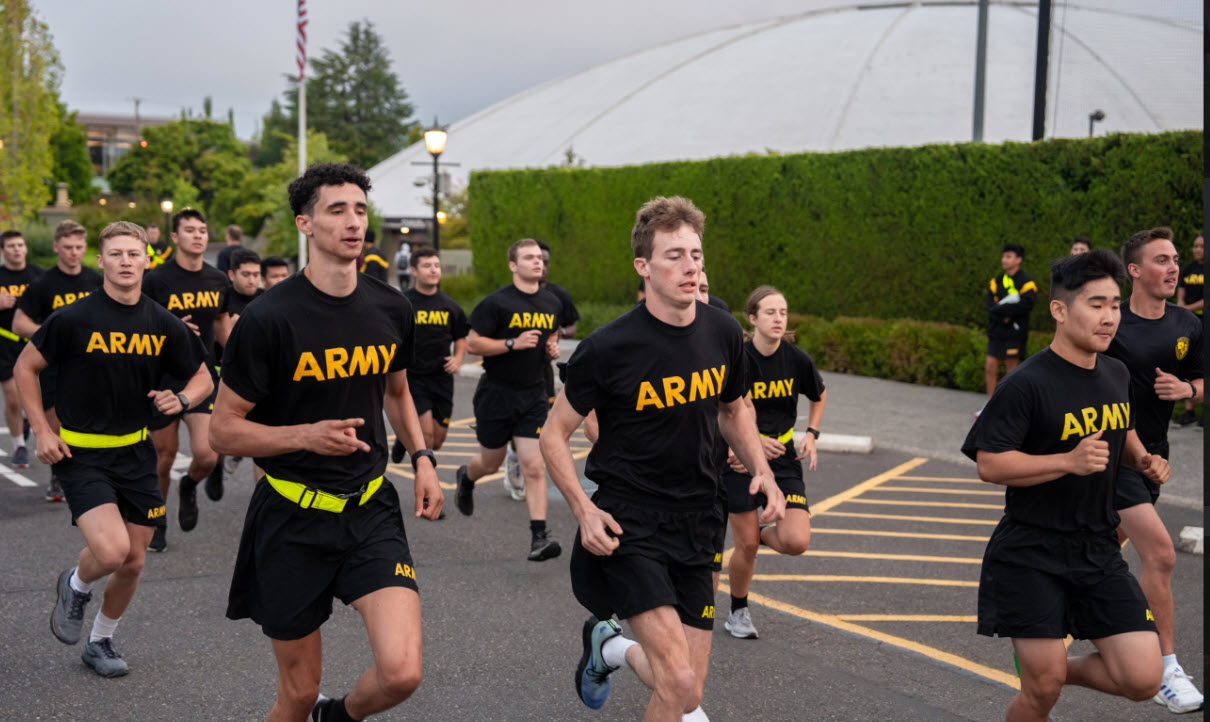
Every Monday, Wednesday, and Friday, cadets meet at 0630 to conduct Army Physical Training in order to develop, enhance, and challenge each cadet's physical abilities. This development of physical endurance is a crucial part of the cadet's future Army career. Cadet’s train to develop holistic fitness to enable success on the Army Combat Fitness Test and other challenging events.
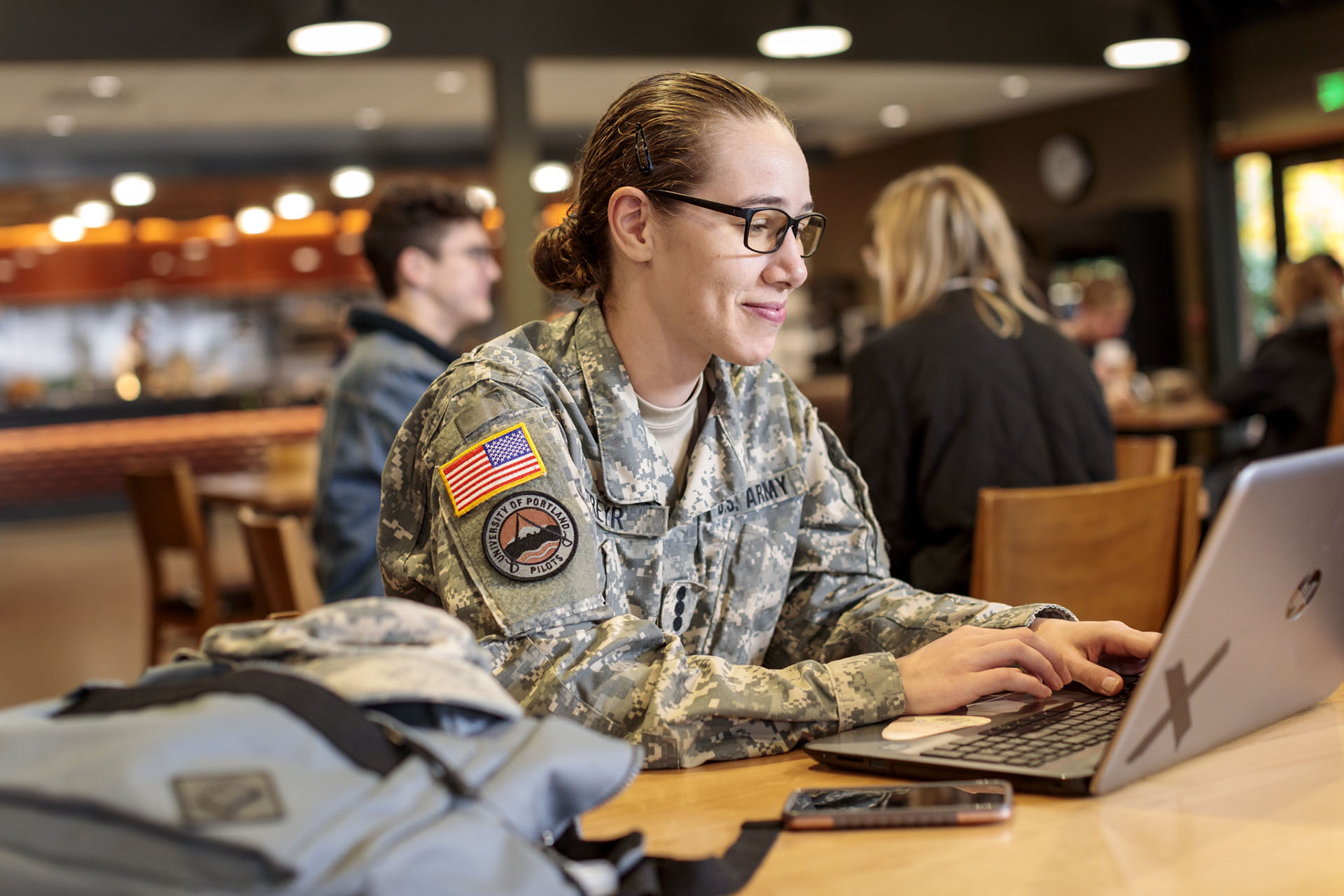
Cadets attend classes like their fellow students, but their schedule includes an augmented exclusive course on leadership offered by the military science department and the 300-level American Military History to satisfy their ROTC course requirements. Cadets attend the following courses according to their year.
Freshman Year: Leadership & Personal Development
Overviews leadership fundamentals such as giving direction, problem solving, listening, presenting briefs, providing feedback, and using effective writing skills. Students begin to explore leadership dimensions and values in a 60-minute class and a 2.5-hour leadership lab every week.
Sophomore Year: Innovative Team Leadership
Examines the challenges of leading in complex contemporary operational environments. Dimensions of the cross-cultural challenges of leadership in a constantly changing world and their application to leadership tasks and situations is covered. Case studies and importance of teamwork and tactics in real world settings are explored.
Junior Year: Adaptive Tactical Leadership
Study of intense situational leadership challenges to build student awareness and skills in leading small units. Skills in decision-making and motivating team members when "under fire" are explored, evaluated, and developed.
Senior Year: Developing Adaptive Leaders
Explores the dynamics of leading in the complex situations of current military operations. Students examine differences in customs and courtesies, military law, principles of war, and rules of engagement in the face of international terrorism. Aspects of interacting with non-governmental organizations, civilians on the battlefield, and host nation support are examined and evaluated.
After Graduation
Army ROTC prepares you for a lifetime of success. Graduates of the ROTC programs have exceptional opportunities to begin their Army careers or continue their education following graduation and interested in the AMEDD, Chaplain, or JAG professions. Once you graduate, you will be an officer in the Army with leadership and management skills, access to excellent financial aid to continue your education, and the career skills employers look for in people they hire and promote.
Upon completion of the Army ROTC program, graduates will be commissioned as Second Lieutenants in the U.S. Army and will embark on specialized training in their first Army branch. There are a variety of branches that are available to students.
Upon completion of Officer branch training and a first assignment, Army Officers may pursue additional specialized training and postgraduate education opportunities. They will be assigned to advanced leadership job positions and to staff positions in upper management. Also, they may develop doctrine, teach military tactics or serve as advisors.
Those interested in attending graduate school can apply for an educational delay postponing active duty or once on active duty there are programs that can pay up to 100% of your tuition costs.
Army Branches
Going UP?
Go farther and dream bigger than you ever thought possible. Join a community that's on a mission to change the world for the better. New experiences are waiting.