
Decolonizing Ecology: Robin Wall Kimmerer Visits University of Portland
Reciprocity and Land Justice
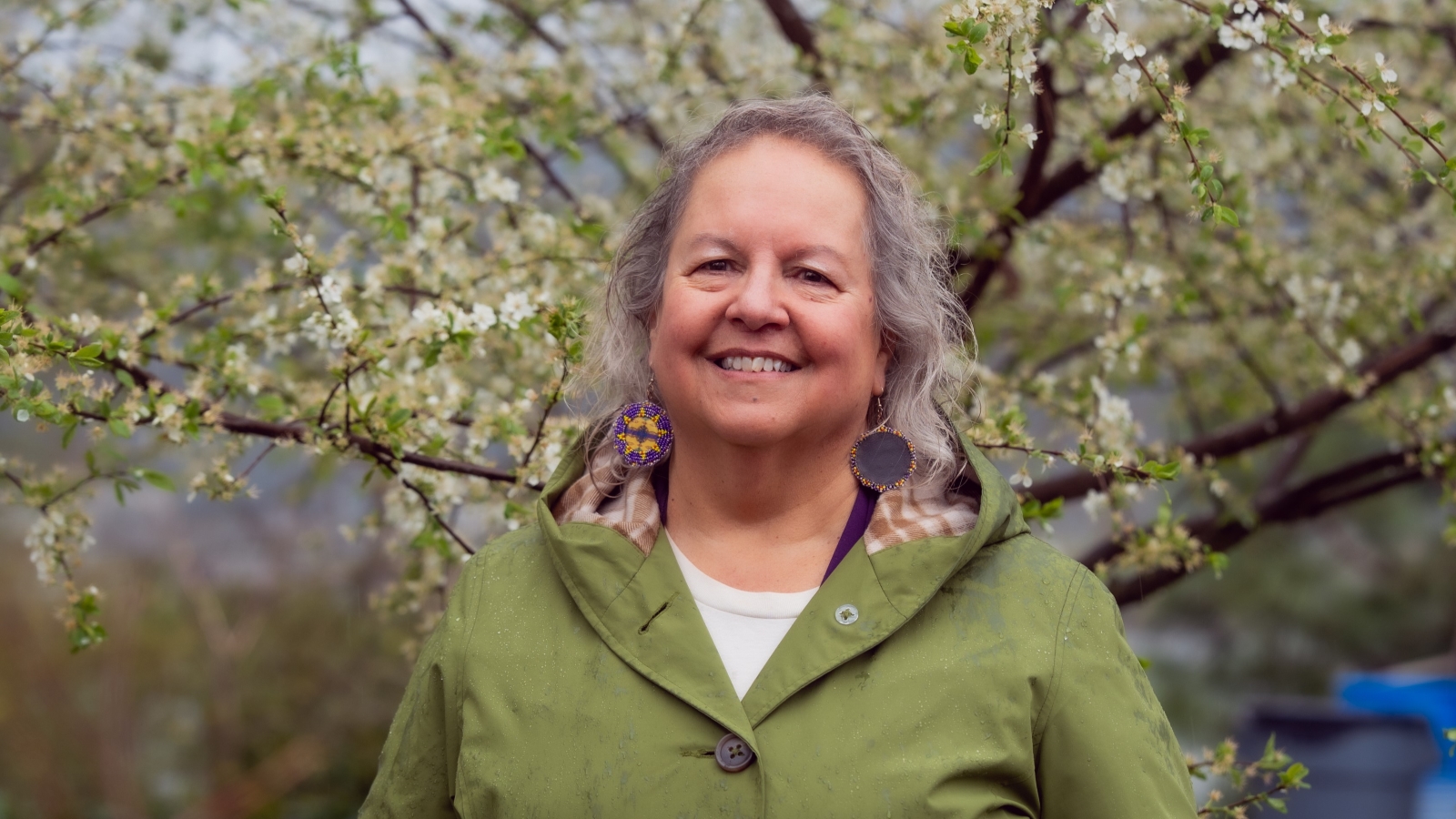
University of Portland recently hosted bestselling author, botanist, environmentalist, and MacArthur Fellow Robin Wall Kimmerer for two days of engaging community events and lessons on reciprocity.
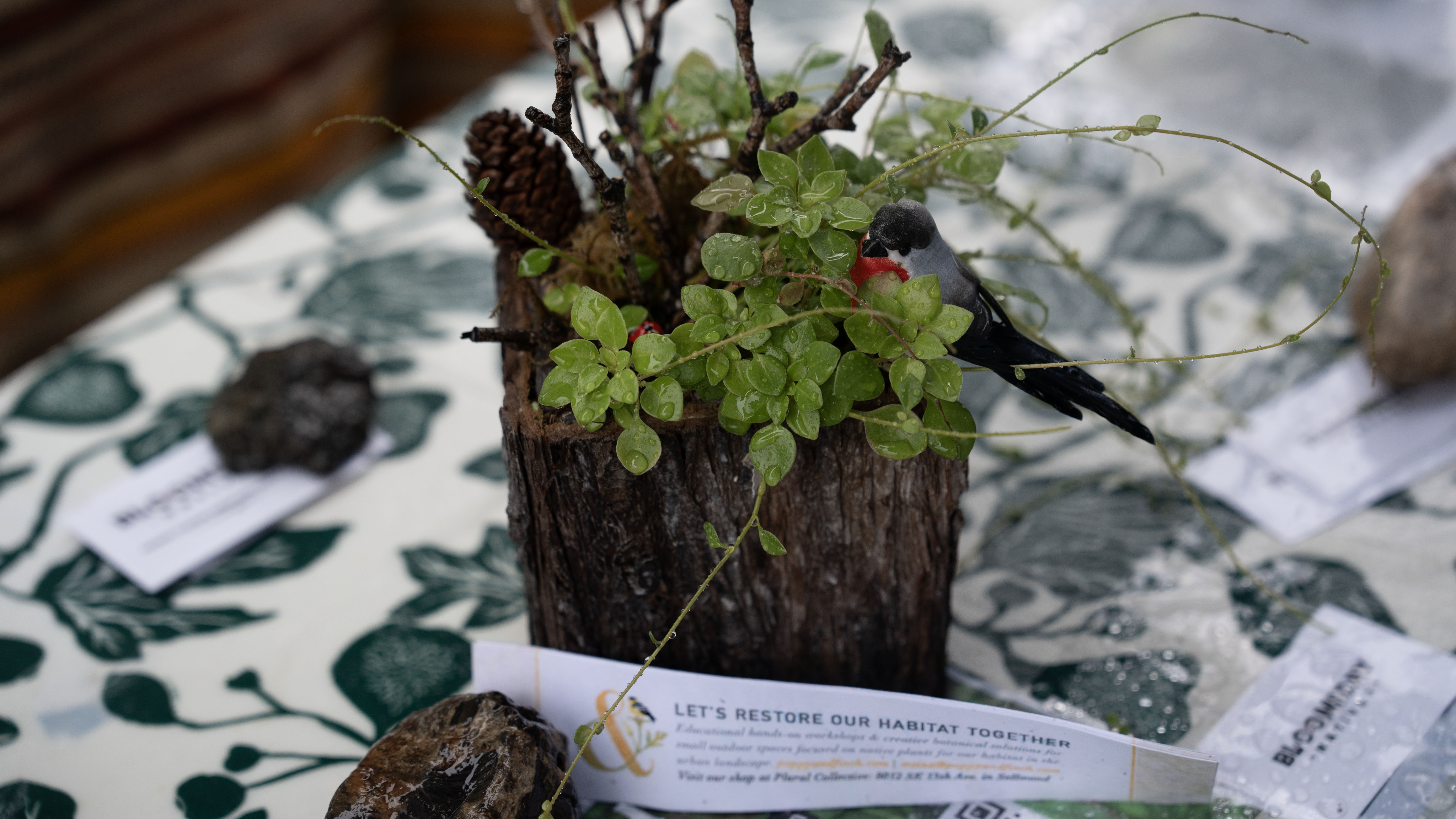
Inspired by Kimmerer’s “Plant Baby Plant” initiative, which encourages people to give back to the living world through acts as varied as planting a tree or creating nature-inspired art, UP’s Student-Led Unity Garden held a day-long community event in her honor. Even in the pouring rain, nearly a hundred students turned out to plant in the pollinator and vegetable gardens overlooking the Willamette River, paint watercolors, and hear inspiring words from Kimmerer herself.
The following day, Kimmerer gave a lecture on reciprocity and land justice based on her best-selling book Braiding Sweetgrass: Indigenous Wisdom, Scientific Knowledge, and the Teachings of Plants.
The lecture was part of the University’s Schoenfeld Distinguished Writers Series and a culmination of UP’s 11th annual ReadUP, a campus-wide common reading program aimed at bringing students, faculty, and staff together.
The landmark event brought more than 1,000 people from all over Portland and the Pacific Northwest to campus, as Kimmerer challenged everyone to move beyond traditional sustainability toward a model of reciprocity and land justice.
Moving Beyond "Sustainability"
Kimmerer’s address focused on the intersection between Western ecological science and Indigenous worldviews and urged everyone in the audience to reframe how they see the land, the environment, and our roles as stewards.
1. The Metaphor of Braiding Sweetgrass
As in her book Braiding Sweetgrass, the core of Kimmerer’s talk dealt with the integration of three distinct types of knowledge:
- Indigenous Philosophy: Ancient wisdom and cultural traditions.
- Western Science: Empirical data and objective observation.
- Knowledge of the Plants: Recognizing the agency and teachings of the living world.
Kimmer said that by weaving together the knowledge of each tradition—indigenous, Western science, and the lessons we can learn from observing the plants themselves—we can cultivate a more holistic view of environmental stewardship that is reciprocal rather than transactional.
She advocated for Two-Eyed Seeing, a methodology that values both indigenous and Western lenses to solve global environmental crises, noting that 80% of the world’s remaining biodiversity is located within indigenous homelands, proving the efficacy of indigenous land management.
2. From "Taking" to "Giving"
Kimmerer critiqued the modern definition of sustainability, noting it often asks how we can keep "taking" from the earth. She proposed a paradigm shift based on the "Dish With One Spoon" Treaty, an agreement between indigenous nations emphasizing that we must keep the "bowl" (the Earth) clean and full, taking only what is needed.
“We recognize that we have a responsibility to keep that bowl clean, to keep that bowl full, to honor the gifts that Mother Earth has given to us,” she said. “There's more though … there's multiple nations but one spoon, so this is not only about caring for the whole that Mother Earth has built for us. It's about caring for each other, isn't it? This is a statement about justice. It's a statement about environmental justice that far predates this time, and so this has been called the oldest international sustainability policy of the planet.”
3. Decolonizing Our World View
Kimmerer contrasted how Western thought traditions associate land with ownership, while indigenous traditions associate land with identity, and revealed how these values inform how we treat our environment.
“In the indigenous world... land is the source of who we are. It's our identity. … Land is not only our home, but the home of our more-than-human family, our relatives as well. Land is our connection to our ancestors and to the ancestors who we will become. Land is the teacher. Land is the source of knowledge. It's the library. Land is the pharmacy. Land is inspirited. Land is never a place for which you could possibly buy rights. Land is the place for which you accept moral responsibility because the land is sacred.”
Reflecting on her grandfather’s experience of forced assimilation at the Carlisle Indian School, Kimmerer called for a "decolonization" of our worldview.
“So ask yourself, how has your worldview been colonized? Are you a victim of assimilation as well? Who taught you that land was property and natural resources and not your sacred home? Why is that true? Ask yourself that question. And what are you going to do about it? How do we do Carlisle in reverse?”
Linguistic Imperialism: The Grammar of Animacy
A standout moment of Kimmerer’s lecture addressed how the English language objectifies nature. By using "it" to describe living beings, Kimmerer argues we make exploitation easier.
“Isn't it easier to cut down a tree if we call it ‘it’? ‘I'm going to go cut it down.’ Okay. What about ‘I'm going to go cut her down.’ Oh, maybe not, right? This automatically triggers a sense of relationship. English allows us to objectify all of nature… Do you suppose it is any mistake that English is the language of global capitalism and the extractive economy? This little word is a big word. It's a really big word. And in the Potawatomi language, of which I am just a rudimentary beginner, it's impossible to say ‘it’ about a tree or a robin or a river or a fish. The language is constructed in such a way that we speak of them with the same grammar that we use for our brothers and sisters because they are our brothers and sisters.”
- The Potawatomi Approach: Uses animate grammar for all living things.
- Proposed Solution: Kimmerer introduced the pronoun "ki" (singular) and "kin" (plural) to grant personhood to the natural world, and encouraged everyone to begin referring to all living beings as “ki” or “kin.”
Using our Gifts to Give Back to the World
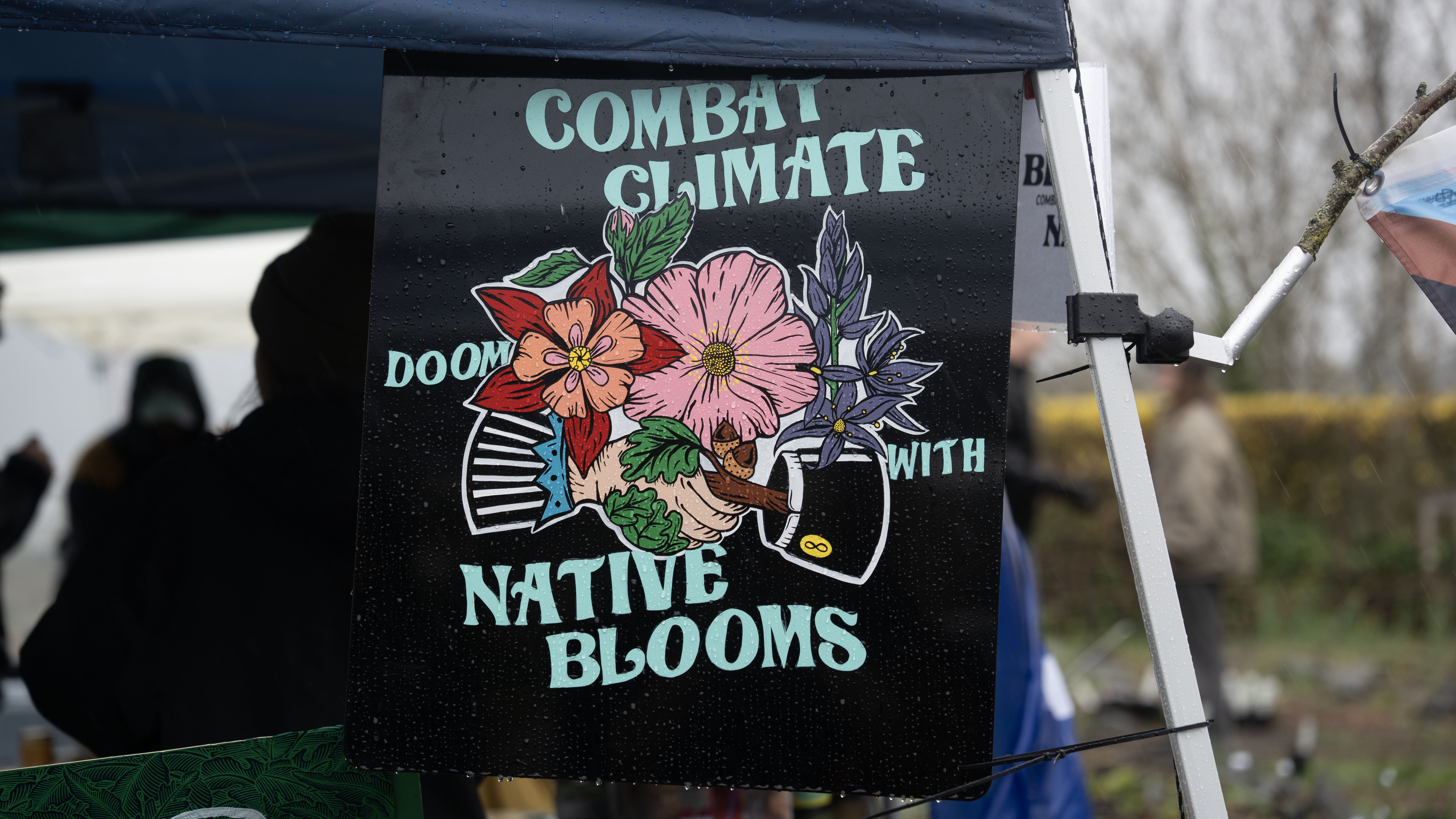
Kimmerer’s inspiring talk included a challenge to all in attendance to use these “pronouns of the revolution” as a way toward “recognizing the rights of nature … the personhood of all beings, and let this indigenous wisdom of our kinship and respect for the rest of the world be the spark for a whole new system of jurisprudence that brings justice to our relations with the rest of the world.”
It’s a daunting task to unlearn the systems embedded in Western culture that have led us toward a climate crisis, but she reminded us all that everyone was born with a gift to share with the earth. She defined an educated person as one who identifies their unique gift—whether in body, mind, emotion, or spirit—and learns how to give it back to the world. Through initiatives like UP’s Student-Led Unity Garden and the "Green UP" celebration, which Kimmerer attended the day before, the campus community is already beginning to replace the "fictional pyramid" of human dominance with a web of kinship.