Public Research Fellows
Public Research Fellows
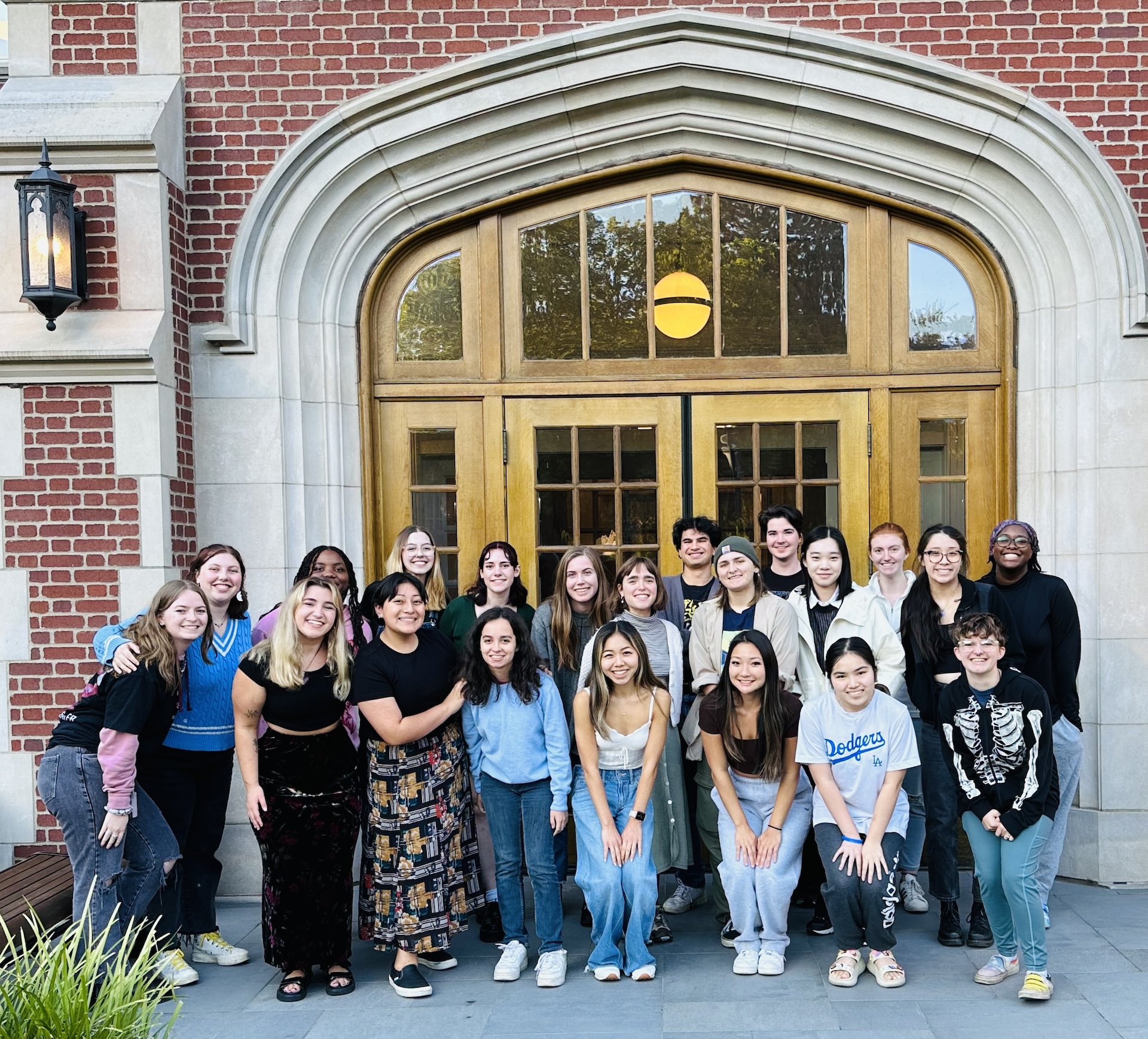
The Public Research Fellows is the Hub's interdisciplinary undergraduate research program that supports student and faculty teams in the creation of public-facing projects that engage the humanities with the world outside the classroom. Since 2019, the program has brought together more than 40 faculty and 100 students from 18 departments across UP to explore timely issues and create projects that connect campus and community.
The program's umbrella theme, "Engaging Portland," calls on faculty and students to make connections between their academic work and the communities in which we live.
Jump to 2026-27 Projects | Jump to Program Archive
How does the program work?
The 3-credit, year-long experience provides students a powerful combination of recognized high-impact practices that take their UP education to the next level. In addition to working with their research teams across the year, students take Engaged Humanities Fundamentals in the Fall, a 1-credit reading course that provides a foundation in creative methods for connecting research to wider publics and a space for students to learn from each other as they build their projects.
By participating in the program, student fellows gain:
- Experience in designing and implementing a research project that makes an impact outside of the classroom
- Close-knit relationships with faculty fellows from multiple disciplines
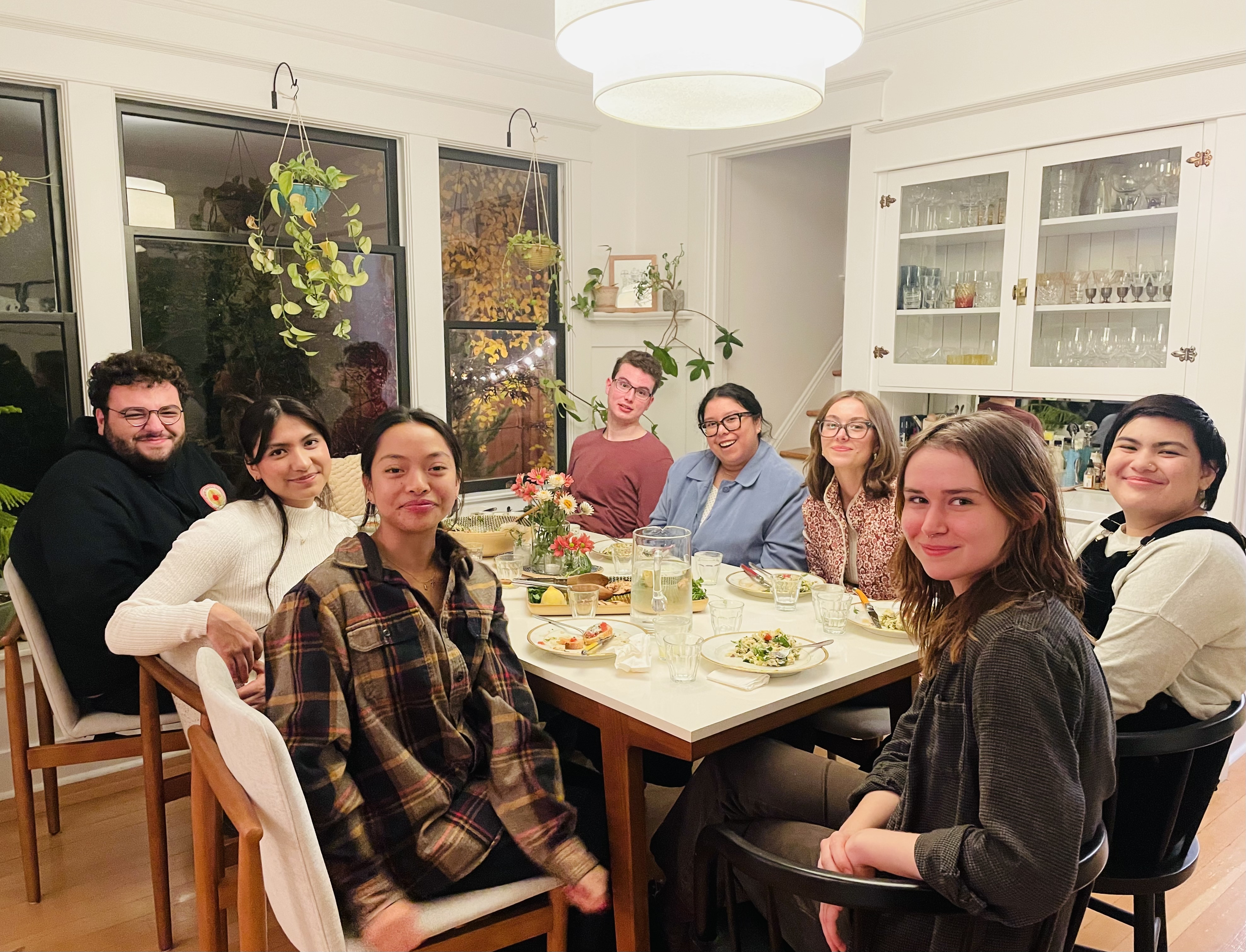
- A learning cohort of like-minded student fellows from a variety of majors
- Professional development opportunities that help connect academic work with students' futures
How to get involved
Each spring semester, the program puts out a call for faculty and student fellows to join for the following year.
Faculty can propose a new "Engaging Portland" project or they can join an existing, multi-year project; faculty fellows join the Engaged Humanities Working Group, meeting once a month for project support, collaborative brainstorming, and discussion of readings and research.
2026-2027 Projects
Thinking Fans: Sports and Civic Imagination
What happens when we take sports seriously as an object of humanistic inquiry using tools such as close reading, cultural comparison, and attention to local stories? And what might that reveal about cultivating civic imagination in places such as Portland, where a mix of local sports cultures and fan cultures create distinctive spaces for defining our communities? This project explores these types of questions by: creating accessible essays and recorded interviews with interdisciplinary scholars; building a small archive of teaching resources, including essays, recordings, and discussion guides, that can serve students and faculty across disciplines; and undertaking research to further explore relationships between fandom, intellectual curiosity, and civic imagination.
Team: Andrew Guest (Professor of Psychology), Megan Galian, Abbey Koffler
Vibe Maps: Mapping the Felt Life of Place
Places are not only physical environments. They are also fields of feeling, memory, and meaning. In this civic humanities research project, students will collaborate to develop Vibe Maps, experimental maps that document the emotional, cultural, and sensory atmospheres of everyday places. The project asks how environments shape how people feel, relate, and move through the world, and how making these atmospheres visible might deepen understanding of shared spaces. Students will conduct field explorations using sensory observation, reflective writing, and creative mapping to document the “vibes” of specific locations in the city. The project blends research and creative practice, drawing on approaches such as participant observation and research creation to explore how lived experience, cultural norms, and physical environments interact.
Team: Corey Pressman (Professor of Public Health and Wellness), Lucas Aranda, Sophia Escoto, Rhianne Pacifico, Beneen Salim
Marketing the Engaged Humanities
This multi-year project brings together humanities thinking with problem-solving mindsets and skills in the social sciences to develop and implement a comprehensive and engaging marketing campaign for the Humanities at UP. By focusing on UP's unique combination of mission and location, the project aims to make a compelling case for studying the humanities at UP. Students will continue the work of the 25/26 project to further identify stories and narratives that promote the Engaged Humanities at UP.
Team: Shaz Vijlee (Associate Professor of Engineering), Felix Petteni, Ice Rodriguez-Sanders
Engaging Dialogue Across Difference: Community Connections
How can we better create community connections with our UP neighbors? How does dialogue help in creating community connections? The goals of this project are 1) to help facilitate sustained relationships with our nearby community members through dialogue and storytelling, starting with Our Village Gardens and Vanport Mosaic, and 2) to establish an online magazine to showcase stories of connectivity and perspective-taking.
Team: Anne Santiago (Associate Professor of Political Science and Global Affairs), Gina Geske, Wes Helms, Tessa Poppe
Neighborhood Humanities
How can the humanities help UP create connections with our local communities? And how can the practices of the humanities classroom—things like careful reading, open-ended conversation, and rigorous questioning—create healthier civic cultures in a time of deep divides and increased isolation? This project will attempt to explore those questions by working in three related veins of the Engaged Humanities program: first, by developing a “Neighborhood Humanities” curriculum that brings UP students together with nearby community members to learn together about a timely topic; second, by researching local community partners to house future Civic Humanities internships; and third, by creating sustainable civic humanities networks including alumni as well as faculty at other Portland-area colleges and universities.
Team: Molly Hiro (Professor of English), Jen McDaneld (English Instructor), Ainsley Henry, Isabella Nicoletti, Nika Spalaris
Can Propaganda Be Used for Good?
Propaganda is often used to mislead and manipulate its consumers, taking the form of catchy slogans in marketing ads or provocative claims made during political campaigns. In a time when we are especially susceptible to misinformation, can propaganda be used for good? That is, can propagandistic measures inform and empower the public rather than lead them to false and unfounded beliefs? Can they be effective against the onslaught of sensationalized, exaggerated and baseless claims? Are such techniques ever ethically defensible?
Team: Sruthi Rothenfluch (Assistant Professor of Philosophy), Arjun Bains, Henry Dahlin, Hannah Natali
2025-2026
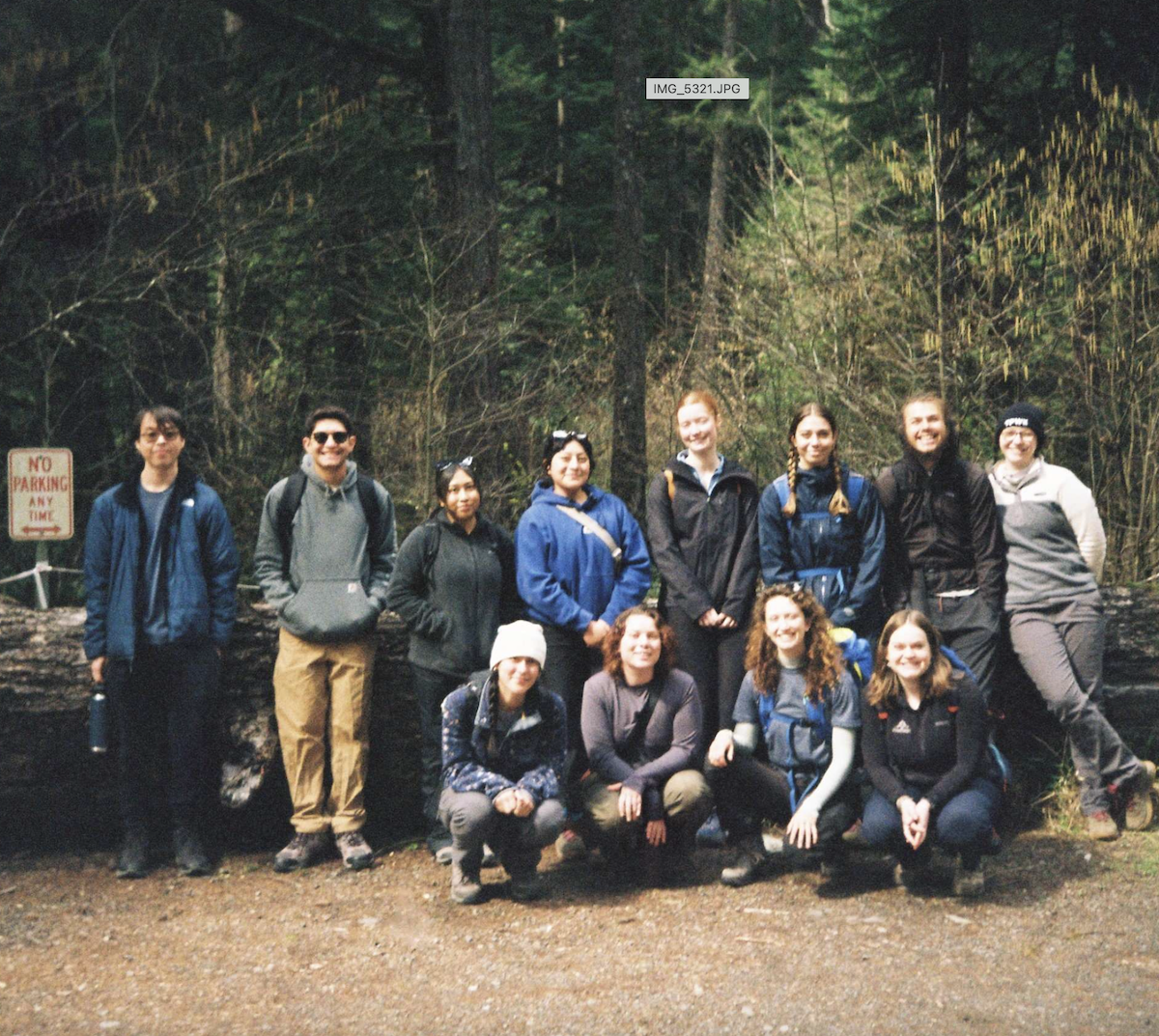
We often think of the study of the environment as something best done by physical scientists who measure water levels, analyze climate records, and model atmospheric patterns. But considering the environment presents problems of scale and perspective that are as imaginative and philosophical as they are quantitative. Our relationship with the natural world and our hopes for the earth’s future are very much related to our imaginative worlds and the stories we tell about them. With this year’s program theme, “Wild Humanities,” we explored ways of shaping and sharing those stories. How do we think differently about the environment when we use the humanities as practices for doing so? Across the year the program investigated those questions through a variety of research projects and events with the goal of engaging the environment at multiple levels: conceptually, on campus, and in our civic contexts.
2024-2025
Like most cities, Portland has struggled to bring citizens together across differences in identities and ideologies. University campuses could be a space for addressing these struggles, but instead students report feeling under-equipped to handle discussion and disagreement around difficult topics, while the wider public reports weakening confidence in the purpose of college. Inspired by these challenges, our theme this year, "Everyday Democracy," posited that bridging the gulfs that divide us might begin with ordinary gestures as simple as talking with one another and engaging locally. The program brought together a working group of faculty, students, and community partners to co-create projects and courses related to everyday dialogue and civic life.
2023-2024
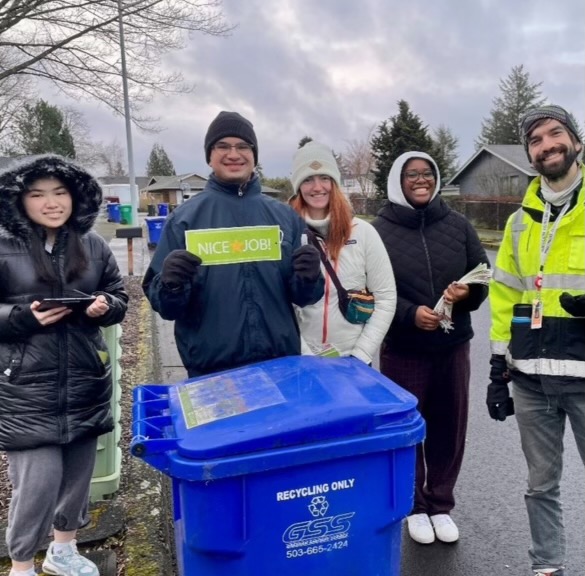
This year the program settled on a single broad theme, "Engaging Portland," to help address the long-standing divide between university campuses and the communities in which they're situated. How might a university like UP proactively respond to this tension? We brought together six research teams to create a wide range of projects that connected with our local context, from partnering with a local organization to do archival work on campus, to developing public humanities strategies for incentivizing recycling with the City of Gresham, to building new curricular modules for connecting political science courses to civic engagement.
2022-2023
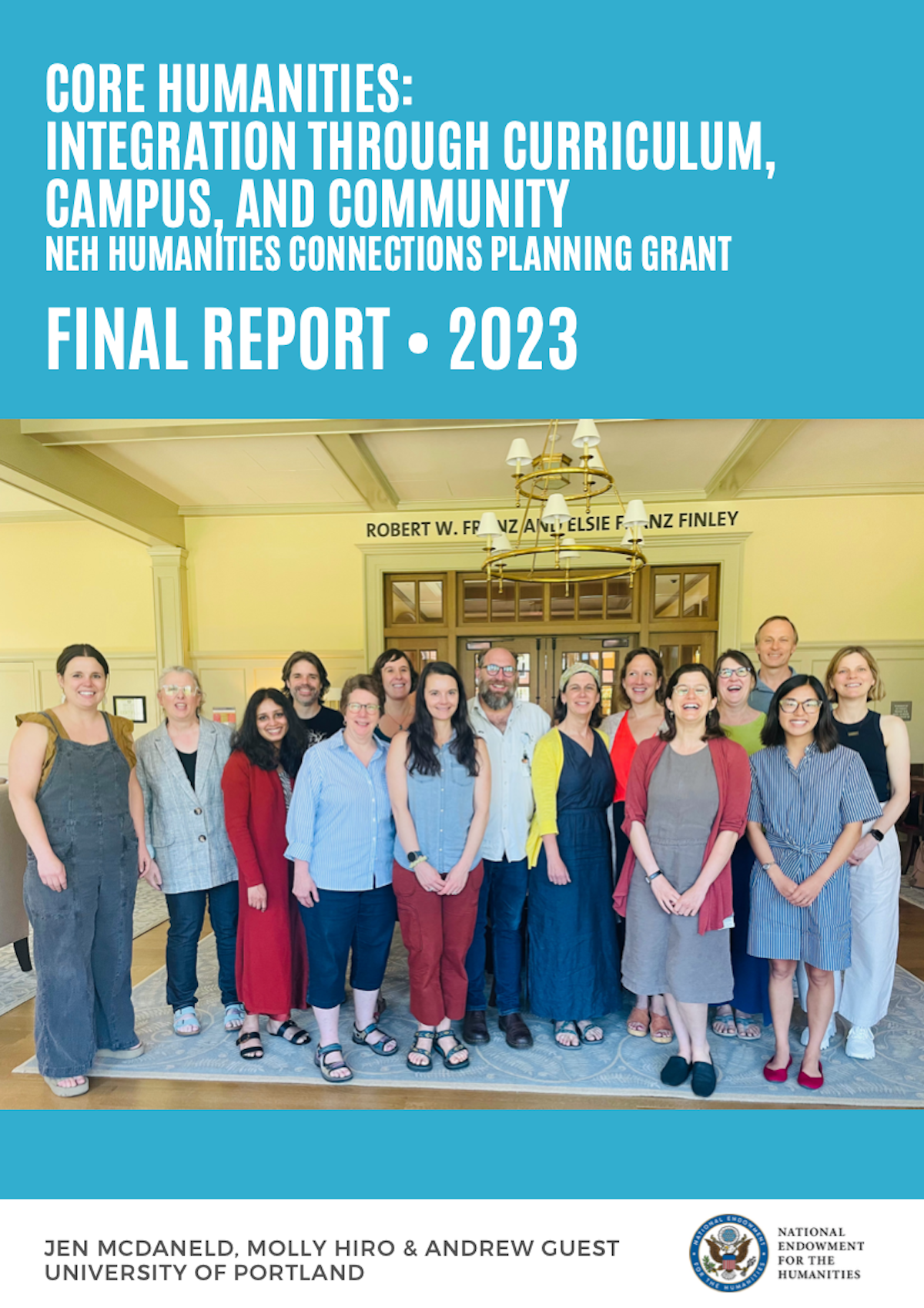
The program won its first major grant from the National Endowment for the Humanities for their project “Core Humanities: Integration Through Curriculum, Campus, and Community.” Across the year, program directors worked on two main areas: first, developing new engaged humanities Core courses; and second, laying groundwork for an Engaged Humanities Hub to support the long-term advancement of the humanities on UP’s campus. In addition to researching humanities programs across the country, including a visit to Pomona College's Humanities Studio, the directors proposed the theme "The City and the Campus: Models for Becoming the University for Portland" for UP's annual Faculty Development Day--a day-long conference attended by all UP faculty that provided a campus-wide opportunity to infuse engaged humanities thinking into teaching and research across UP.
2021-2022
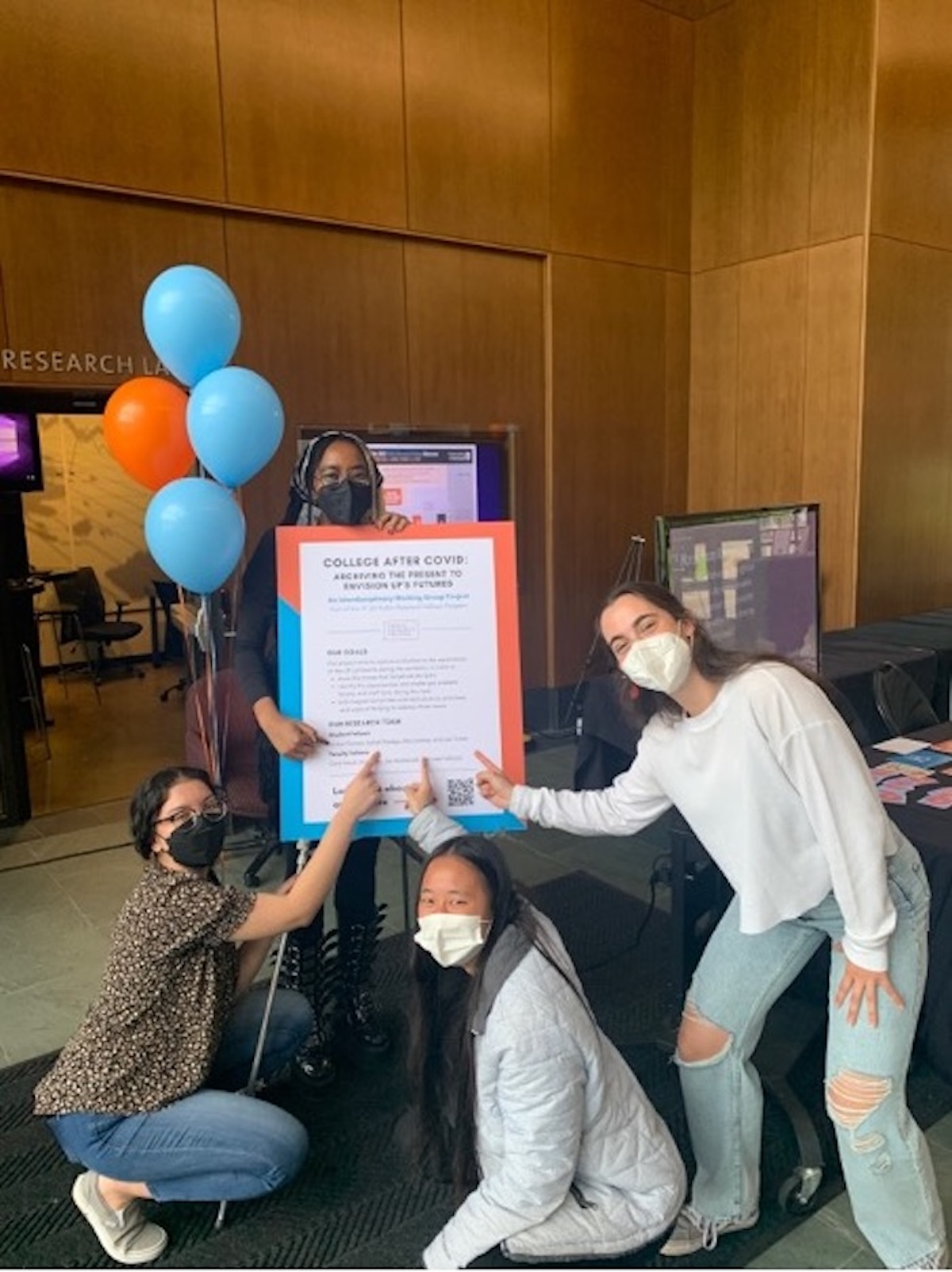
Using a working group model for the first time, the program brought together 3 research teams under the theme of "Engaging Interdisciplinarity" to explore timely topics and expanded what academic research and outcomes might look like. Drawing from disciplines across campus, including English, Environmental Studies, Psychological Sciences, Public Health and Wellness, and the Performing Arts, the working groups brought faculty and students together to collectively design, build, and disseminate research. Their topics and methods ranged widely, from telling the little-known stories of Portland foodways, to measuring the potential healing power of art and music, to archiving UP's pandemic experiences.
Going UP?
Go farther and dream bigger than you ever thought possible. Join a community that's on a mission to change the world for the better. New experiences are waiting.