
School of Education
Student Success
Alumni and Advancement
Graduate School
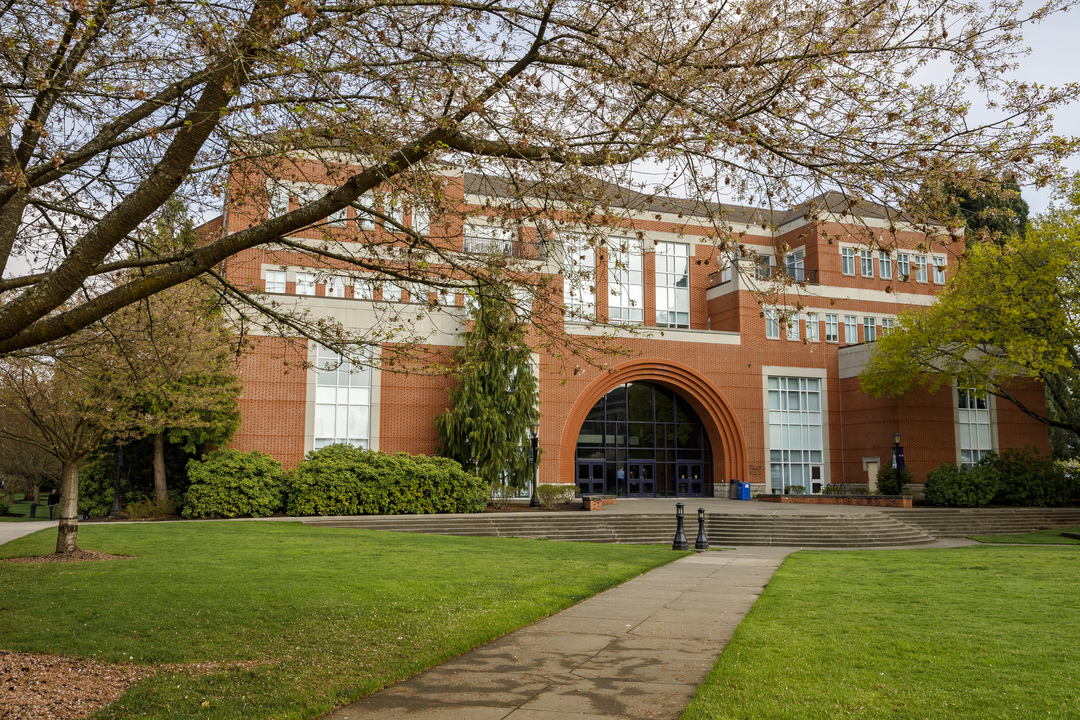
Leading the AI Era with Hope and Ethics: How University of Portland Educates Future-Ready Leaders
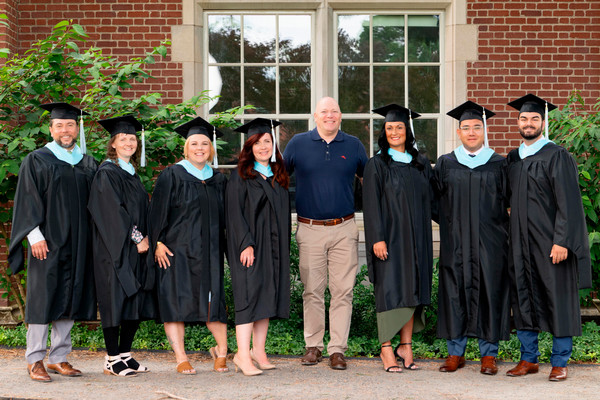
Photo left: Dean Watzke (center) with recent graduate school graduates.
Key Takeaways
- Ethical & Human-Centered Focus: University of Portland (UP) integrates AI education across its graduate schools—business, nursing, and education—emphasizing critical thinking, ethics, and human intervention.
- Cross-Disciplinary Integration: Programs prepare students to address AI challenges in each discipline, including clinical decision-making in health care, school administration in education, and governance in business.
- Experiential Learning: UP students gain hands-on experience through case-based discourse, AI output audits, risk assessments, and the development of real-world organizational AI policies.
- Values-Driven Leadership: The curriculum equips future leaders to ask fundamental questions regarding the human consequences and community impact of technology implementation.
It's been just four short years since ChatGPT was released to the public and social media feeds are full of AI-generated content, friends and colleagues are sharing advice they got from Claude, and workplaces are prioritizing the use of AI to maximize efficiencies. These tools are integrating into daily life at breakneck speed and universities around the world are realigning their curriculum to prepare students to adapt to the AI era.
But while it may be tempting to outsource nearly everything to these powerful tools, safely and successfully navigating the brave new world of AI requires human intervention to ensure positive rather than negative consequences. To that end, University of Portland’s graduate schools of business, nursing, and education are not only preparing students to become critical thinkers, leaders, and problem solvers in their fields, they are preparing them to lead the way in shaping how we approach AI and steer it with ethics at the forefront. The AI-related news headlines put a finer point on this need.
Ethical AI Integration Across Education, Healthcare, and Business
John Watzke, Dean of University of Portland’s Graduate School and School of Education, says the University sees AI as integral to professional preparation. “Across business, healthcare, education, and other professional fields, our students are learning how emerging technologies can inform policy, improve practice, strengthen decision-making, and create new possibilities,” he said.
That’s why an important goal of the graduate programs is to prepare people to lead in a world in which AI is one of many tools available, and to do so ethically. “That means understanding what these technologies can do, where they can improve professional practice, and the ethical questions and human consequences that come with their use,” said Watzke. “Our graduates need to be able to ask not only, ‘Can we use this technology?’ but also, ‘How should we use it? What problem are we trying to solve? Who will be affected? And how do we translate an innovation into something that genuinely improves people’s lives?’”
Joane Moceri, Dean of the School of School of nursing and Health Innovations, is certain that AI plays an important role in health care. She said, “There are many ways AI is already being used in healthcare to improve outcomes, such as recording patient interactions, and helping interpret diagnostic tests. In these cases, the ethical issues related to privacy are also being addressed."
Joy Moceri, Assistant Professor in the Doctor of Nursing Practice and Family Nurse Practitioner Program, says it’s crucial to provide students with a framework to think critically about when, if, and how to use AI. “Regardless of where any of us stands on AI in health care, avoiding the conversation as educators means failing to prepare students for the real landscape they're entering," she said. “AI use is a double-edged sword, and our job is to educate for ethical use, both as students and future clinicians.”
By contrast, there’s almost no debate about embracing AI in the business world, however the conversation is quickly shifting toward regulation. As concerns about the potential consequences of unregulated development and use of AI technologies continue to rise, businesses are evaluating their responsibility to provide internal guardrails. “Adopting AI in business isn't just a technological decision; it's a strategic and ethical commitment,” says Michael DeVaughn, Dean of the School of Business. “Our goal is to train leaders who look beyond speed and short-term ROI to ask critical questions about data privacy, algorithmic accountability, and human oversight.”
Experiential AI Learning: Bridging Technology, Human Values, and Community Need
Experiential learning is integral to UP’s graduate programs. From substantial clinical experiences and practica to internships and professional projects with industry partners, students are placed directly into the environments in which they will work and lead. That same philosophy informs how students learn how to effectively—and ethically—use AI tools. Whether they’re conducting equity audits of AI outputs or developing workplace AI use policies, students come away with a framework for understanding present and future problems with a solutions-oriented mindset.
“I often think of our graduates as bridges between technology and communities,” said Watzke. “A business leader may be translating new technology into better organizational practices or entrepreneurial opportunities. A healthcare professional may use innovation to improve clinical practice and patient outcomes. An educator may be helping a school or school system understand how emerging technologies can support teaching and learning while protecting what is fundamentally human about education.”
Mentorship and professional collaboration also play large roles in the curriculum. “Students learn through story; our faculty and preceptors bring a wealth of meaningful case-based anecdotes to the classroom, and that kind of discourse is crucial,” said Moceri.
And putting theory into practice is key to career readiness. "Our business students aren't just observing the AI transformation—they're learning how to lead it," said DeVaughn. "Through hands-on consulting scenarios and case-based simulations, students wrestle with the complex realities of AI deployment, evaluate risk and algorithmic bias, and debate the actionable guidelines companies need to govern emerging technologies responsibly."
There is no doubt that generative AI tools have had an outsized impact on nearly every industry in just a few short years–and ensuring that impact serves the greater good is a top goal of ethical leaders and the University dedicated to developing them.
“AI can provide remarkable tools, but people still must decide how those tools will be used, lead the organizations that use them, and connect innovation to the people it is meant to serve,” said Watzke.
Resources
Humanity’s Role in a Digital World
UP-Hosted Conference Advanced AI Exploration; Propels Pope’s Letter
Related Posts

School of Nursing and Health Innovations
Graduate School
Developing Clinicians Our Communities Need Most
Graduate School
School of Business
University of Portland, Marketing Program Ignites Diagnostic Thinking
Graduate School
Alumni and Advancement
School of Education